

Healthy Coral Clones Help Bleached Fragments Recover in Laboratory Study
Stanford and The Optimist Daily described algae transfer between touching corals, revealing a recovery mechanism while highlighting obstacles to reef-scale restoration.
Written with AI assistance from the reports named below. How we work
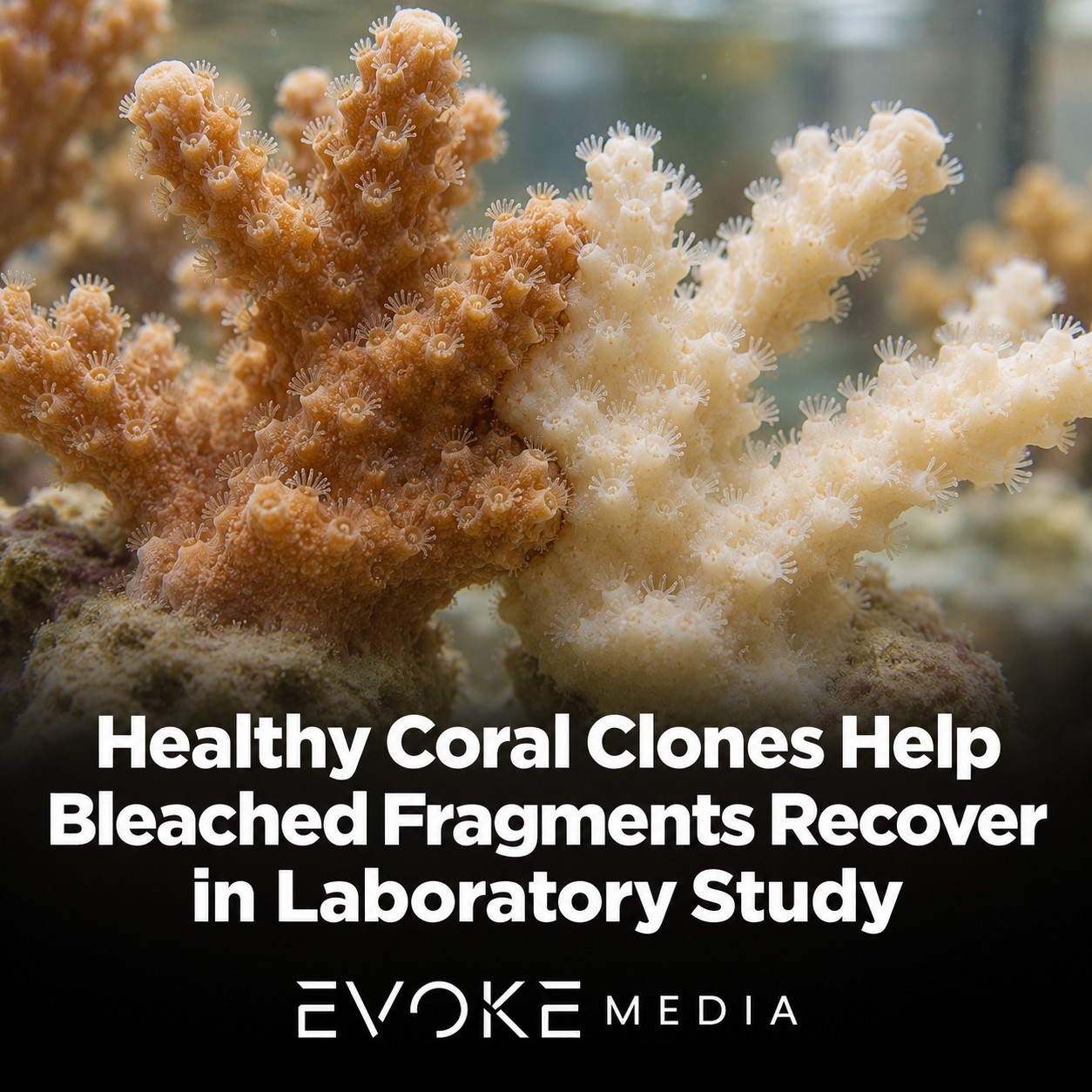
Bleached coral fragments recovered after contact with healthy, genetically identical neighbours in a laboratory study, according to Stanford and The Optimist Daily.
The researchers observed beneficial algae and nutrients moving between fragments after their tissues fused. Stanford reported that the bleached corals regained full health within seven weeks, including when the fragments were separated after a short period of contact.
The findings, published in Science Advances on October 14, identify a natural recovery process that researchers are investigating for possible restoration applications. Both sources stressed that requiring healthy genetic matches presents a major obstacle to using direct contact across entire reefs.
The work followed an accidental observation in a Stanford laboratory. According to Stanford, study coauthor Steve Palumbi noticed in 2025 that two fragments from the same colony had fallen together in a tank. One was healthy and the other bleached. Colour began returning where they touched.
Danny Collins subsequently arranged 10 pairs of fragments, each combining healthy and bleached coral from the same animal. Five pairs touched; the others were separated by gaps of a few millimetres. Stanford reported that the touching fragments recovered within seven weeks, while the bleached fragments without contact died.
Both sources described the importance of a genetic match. The Optimist Daily reported that corals from different genetic backgrounds rejected one another, whereas clones fused their tissues.
Using microscopy, the researchers found that channels within the tissues aligned after contact, allowing algae and nutrients to move between fragments. Stanford reported that beneficial algae reached the bleached coral within three days.
Further experiments examined how long contact was necessary. According to Stanford, one week—and sometimes only five days—allowed enough algae to transfer for the bleached fragments to finish recovering independently. Recovery after separation took seven weeks, matching fragments kept together continuously.
The researchers concluded that algae multiplying within the recovering fragment primarily sustained the process. During the second week of contact, those algae doubled every four days, roughly 10 times faster than the rate observed in wild corals, Stanford reported.
The accounts described the recovery timeline differently. The Optimist Daily characterised a bleached fragment as indistinguishable from its healthy neighbour within a couple of weeks; Stanford gave seven weeks as the time to full recovery.
Bleaching occurs when warming water causes corals to expel algae that provide energy and colour. Stanford explained that surviving corals can otherwise take months or years to recover.
The wider significance extends beyond the animals themselves. Both sources described reefs as supporting marine biodiversity and livelihoods. Stanford also highlighted their protection of coastal communities from storms and flooding.
However, the laboratory result is not a demonstrated method for restoring whole reefs. Stanford’s researchers said obtaining a healthy, genetically identical counterpart for every bleached coral is not feasible at the necessary scale.
Julia Cole of the University of Michigan, who was not involved in the study, similarly told The Optimist Daily that coral-by-coral contact would be difficult across reefs stretching for kilometres.
Both sources described work towards alternative algae-delivery approaches. Stanford said researchers plan to investigate collecting beneficial algae before heat waves and delivering them in batches. The Optimist Daily reported efforts to extract and culture algae for at-risk reefs.
Cole also emphasised that restoration does not address ocean warming itself, pointing to greenhouse gas reductions and a transition away from fossil fuels, according to The Optimist Daily.
Sources
More coverage

Waste-Derived Gas Offers Businesses a Fuel Option Compatible With Existing Equipment
Methane captured from agricultural waste, landfills and wastewater treatment can be processed into renewable natural gas for commercial use, offering businesses an alternative to fossil-derived fuel…
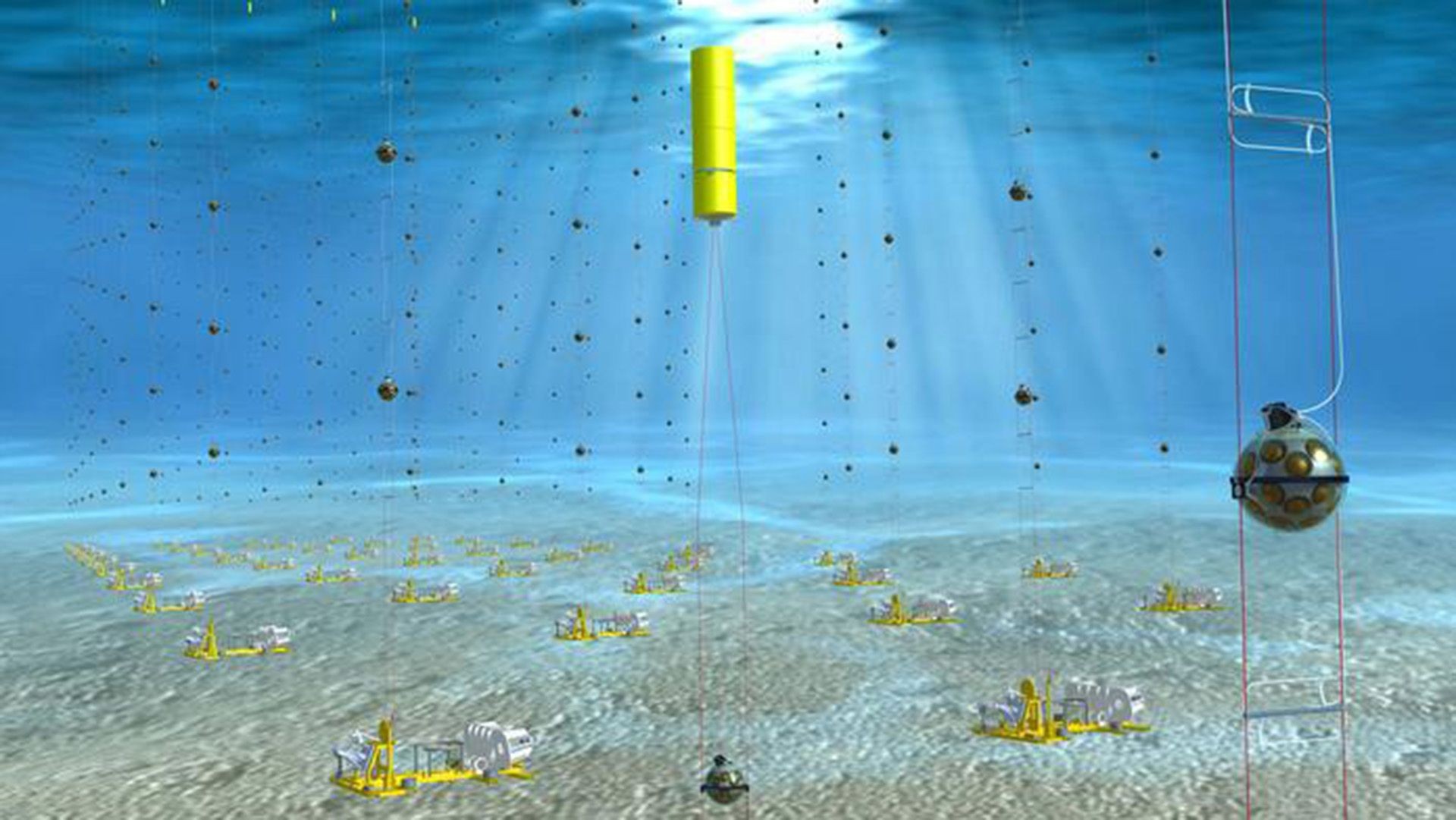
Physicists sank a telescope 1.5 miles under the sea to put Einstein's relativity to the test
A half-built neutrino telescope on the floor of the Mediterranean Sea searched for cracks in one of physics' most basic invariances. It came up empty, but its limits rival those of detectors many times its size.
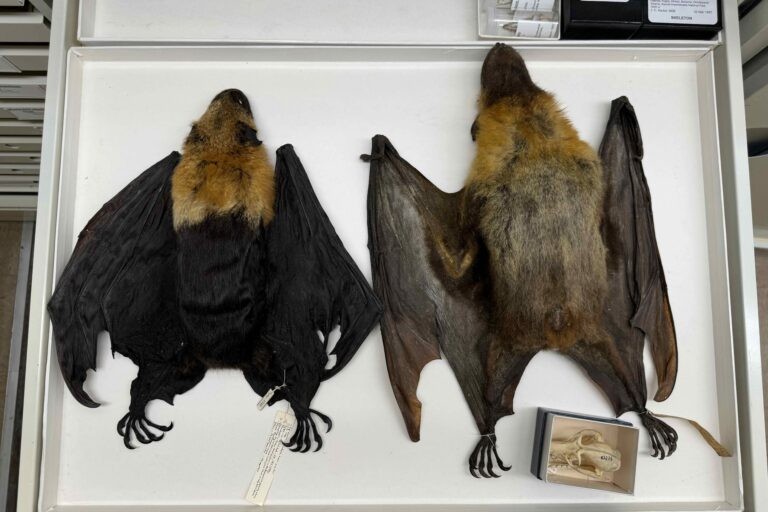
Selective hunting may be making Madagascar’s largest bats smaller, study says
Madagascar’s largest fruit bat is getting smaller, and hunting may be partly to blame, a recent study suggests. The Malagasy flying fox (Pteropus rufus) feeds mainly on fruit and nectar, making it an important pollinator and seed disperser. But the species is also hunted for meat, both for subsistence and commercial…

‘No one cares about the little guy’: Sri Lanka’s fishers still reeling from 2021 toxic plastic spill
A stricken container ship shed tonnes of tiny pellets called nurdles on the west coast. Five years on, locals are counting the cost to marine life and livelihoods On the beach in Pamunugama, on Sri Lanka’s west coast, women in uniform work under the scorching sun. They sift through rubbish washed ashore, searching…