

Weekend Stories: Storms, Earthquake and Conflict Test Civilian Resilience
Hawaii’s battered communities, a deadly Indonesian earthquake and overlapping crises across Europe, Africa and two war zones defined the weekend of August 14–16.

Tropical Storm Lala Leaves Hawaii Facing a Long Recovery
Hurricane Lala weakened to a tropical storm on Sunday after passing close to Hawaii without making landfall, but the distinction offered little comfort to communities hit by destructive wind, exceptional rainfall and flash flooding. The Associated Press reported that about 100 homes were swept from their foundations on the Big Island and more than 200,000 homes and businesses had lost power by midday. By Sunday evening, The Guardian reported one death, more than 100 homes destroyed and roughly 183,000 utility customers still without electricity.
Lala’s eye skirted the Big Island’s southern tip, avoiding the direct strike that forecasters had feared, yet hurricane-force gusts reached exposed terrain while intense rain turned waterways dangerous. Search-and-rescue teams were deployed after floodwaters apparently carried occupied homes off their foundations near Naalehu and Waiʻohinu. Hospitals shifted to generator power, roads were obstructed by fallen trees and utility damage, and warnings extended westward as the storm moved across the island chain.
The weekend illustrated why storm impact cannot be measured by landfall alone. Hawaii’s steep terrain can amplify rainfall, wind and landslide danger, while island infrastructure has limited alternatives when roads, electricity and communications fail together. With immediate danger easing only gradually, the central story shifted from the storm’s classification to restoring power, reaching isolated residents and assessing whether damaged homes and local businesses can recover safely.
Indonesia’s Flores Earthquake Turns Independence Day Into a Relief Operation
A powerful earthquake in eastern Indonesia killed at least 68 people, injured more than 200 and damaged hundreds of buildings, according to the Associated Press. The disaster struck communities on Flores before Indonesia’s Independence Day, leaving thousands waiting for aid as the country marked the anniversary on Monday. The Guardian documented the rising toll and scale of the emergency.
Rescuers faced the familiar complications of reaching scattered communities across a mountainous island where damaged roads and communications can slow casualty reporting and relief distribution. Emergency teams carried food, shelter materials and medical supplies toward residents whose homes were unsafe or destroyed. Officials said assessments were continuing even as no large number of residents remained formally reported missing.
Flores carries a painful memory of the 1992 earthquake and tsunami that killed about 2,500 people. That history does not make direct comparisons appropriate, but it explains the urgency around evacuation, building safety and reliable information after another major shock. The priorities were both immediate and structural: reach survivors, verify the toll, restore access and determine how extensively homes and public facilities had been compromised.
Europe’s Wildfire Emergency Spreads Across Borders
Extreme heat and dry vegetation drove another dangerous weekend of wildfires across Europe. On the Greek island of Salamis, an elderly couple died and more than 500 people were ordered to evacuate, while Belgium battled what officials described as its largest modern wildfire in the High Fens. The Guardian reported that the Belgian fire burned about 3,000 hectares and pushed toward Germany.
The response was explicitly multinational. Belgian and German crews worked alongside water-bombing aircraft from Sweden and helicopters from Belgium and the Netherlands because peat bogs and fragile terrain limited access by heavy vehicles. A Spanish soldier also died while helping fight a fire in Aragon, while crews remained active in France, Croatia and Portugal. An AP update said cooler weather and rain brought partial relief without ending the Belgian emergency.
These were not isolated blazes sharing only a date. Repeated heat, drought and parched vegetation created a connected regional risk in which aircraft and emergency personnel had to move across borders. The weekend showed the importance of shared European response systems while leaving communities with the slower work of accounting for deaths, damaged homes, burned ecosystems and renewed ignition risk.
Ukraine’s Deep-Strike Campaign Escalates the Air War
Ukraine launched hundreds of drones across Russia on Sunday in one of its largest aerial attacks of the war, killing at least six people according to Russian regional authorities. The Associated Press reported that five died in Russia’s Rostov region and a large Wildberries distribution facility near Moscow burned. Russia also struck Kryvyi Rih, where Ukrainian authorities said two people were killed and 14 wounded.
Claims made during active warfare require careful attribution. Moscow announced very high interception totals that could not be independently verified, while Ukrainian officials said Wildberries warehouses formed part of Russian military logistics. The Guardian reported that analysts viewed the attack as evidence of Ukraine’s expanding long-range capability while urging caution over official numbers from both sides.
The deeper significance lies in the changing geography of risk. Ukraine can increasingly target infrastructure far from the front, while Russia continues missile and drone attacks throughout Ukrainian territory. That reciprocal reach places more civilians, supply networks and air-defence systems under pressure and makes escalation harder to contain. The weekend’s deaths on both sides reinforced that technological range does not reduce the war’s human cost.
Zimbabwe’s Lake Kariba Ferry Disaster Toll Climbs
Recovery crews on Lake Kariba continued finding victims from an overloaded ferry that capsized earlier in the week, turning a transport disaster into one of the weekend’s gravest stories. By Sunday, the Associated Press reported that the confirmed death toll had risen to 84. Police said at least 18 children were among those killed while search teams continued working on the vast reservoir.
The ferry had carried passengers toward remote fishing communities when it encountered strong waves. Survivor accounts reported by AP described passengers urging the captain to turn back before the vessel capsized. Casualty figures rose repeatedly as crews recovered more bodies, so the latest weekend total superseded lower initial numbers, including those in The Guardian’s Saturday report.
Beyond the toll, the disaster raises urgent questions about passenger limits, vessel oversight, weather decisions and isolated settlements’ dependence on lake transport. Those questions should not outrun the investigation, but they frame the public-safety stakes. Families remained focused on recovering relatives; authorities must establish how an overloaded ferry departed and which safeguards failed.
Deadly Israeli Strikes Put the Lebanon Truce Under New Pressure
Israeli airstrikes in southern Lebanon killed at least 11 people on Saturday in the deadliest attacks since the June 20 truce with Hezbollah, according to the Associated Press. Lebanese authorities said seven people, including three children, died when a home near Ansar was struck, while a second strike in Deir al-Zahrani killed four and wounded 17.
Israel’s military said the strikes targeted Hezbollah commanders, including a senior figure it accused of involvement in attacks on Israeli troops. Those claims are Israel’s account and were not presented as independently established facts. The Guardian likewise described the attacks as the worst toll since the truce, highlighting the gap between a formal pause and conditions facing civilians.
The June framework sought to connect an Israeli withdrawal with Hezbollah’s disarmament and steps toward a broader settlement, but Hezbollah was not a party to the subsequent agreement and rejected direct talks. Saturday’s deaths therefore tested whether the truce can survive disputed enforcement and continuing military action. The immediate need is accountability for casualties and sufficient restraint to prevent another cycle of retaliation.
More coverage
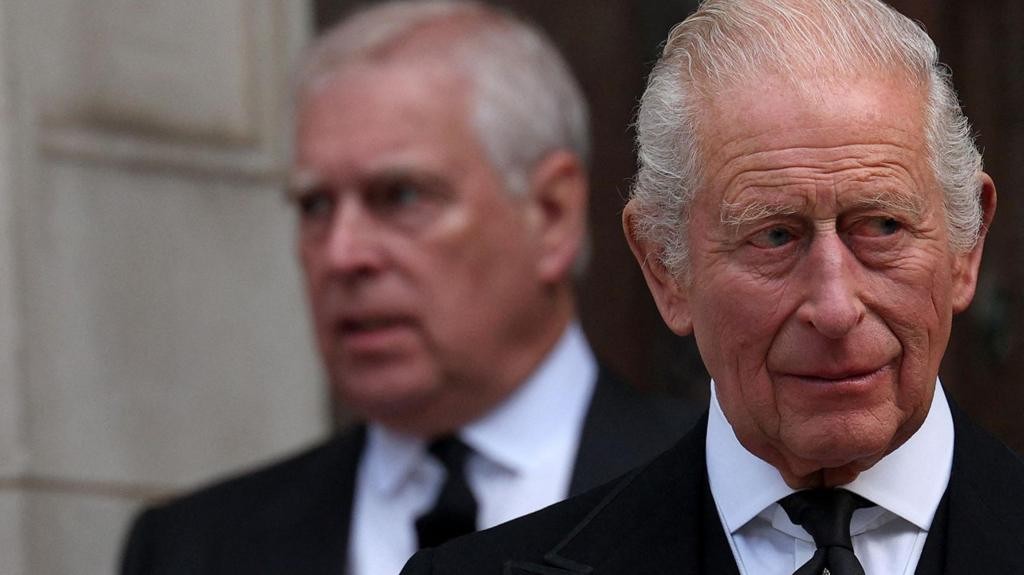
King's funding for Andrew not to be used for legal action against police
Andrew Mountbatten-Windsor is taking action over search warrants issued ahead of his arrest in February.

British Museum boss 'sorry' for Bayeux Tapestry visitor issues
Changes to how visitors see the Bayeux Tapestry exhibition were made after concerns over long queues and overcrowding.

Man who killed dog walker should be deported, says judge
Dawood Safi killed Wayne Broadhurst and injured two others in a knife attack in west London.

Rescued Springer Spaniel Katy Finds a Home in North Yorkshire
Katy, a springer spaniel rescued from a home where 84 dogs were living, has been adopted by Wendy and Lindsay Cann in Cowling, North Yorkshire, BBC News reported. Both supplied BBC reports describe…