

Today’s briefing: Pharma deal talks, privacy questions and Europe’s energy strain
AstraZeneca’s reported US merger talks lead a verified briefing on public-sector accountability, wearable-camera privacy and the Danube’s deepening energy crisis.

Updated 6 August 2026. This briefing uses the freshest reports available on the Evoke Media wire, published on 3–4 August. Each development is attributed to its original source.
AstraZeneca merger talks unsettle investors
AstraZeneca shares fell sharply after a report that the British drugmaker had held discussions about acquiring US rival Bristol Myers Squibb. The Guardian reported that a combination would create a pharmaceutical group valued at close to $400bn and that more than £17bn was wiped from AstraZeneca’s market value as its London-listed shares closed 8.9% lower. Bristol Myers Squibb, based in New Jersey and known for its cancer treatments, was valued at about $133bn before the report. The talks were described as preliminary, with no certainty that a transaction would be completed.
The scale explains both the strategic appeal and the market’s caution. A completed tie-up could form the world’s fourth-largest drugmaker by market value and expand AstraZeneca’s US presence, where it already plans $50bn in research and manufacturing investment by 2030. Analysts cited by The Guardian questioned the rationale, however, pointing to overlapping oncology portfolios, regulatory scrutiny and different growth profiles. The report therefore remains a story about discussions and investor reaction—not an announced merger. Read The Guardian’s report.
Paris prosecutor opens workplace-bullying inquiry
The Paris state prosecutor has opened a preliminary inquiry into alleged workplace bullying after the attempted suicide of an employee in a department connected to the French prime minister’s services, according to The Guardian’s account of reporting by France Inter. The radio station reported that two government employees in separate departments had died by suicide during the previous year and that two others had attempted suicide. A staff representative had submitted a complaint in June, while three internal government inquiries were also opened into individual cases and wider workplace wellbeing.
Important limits remain around what has been established. The departments involved sit under the administrative umbrella of the prime minister’s services, but officials said none of the people concerned worked directly with the prime minister or in his office, and no wrongdoing was alleged against any prime minister. Officials said investigations were continuing with trade-union representatives and announced a specialist workplace-wellbeing audit. The preliminary inquiry concerns allegations; it is not a finding of criminal responsibility or proof that every death or attempt was work-related. Read The Guardian’s report.
Low-cost camera glasses widen Australia’s privacy debate
Kmart’s Anko-branded camera glasses sold out in stores and online across Australia after being offered for A$89, far below the starting price of Meta’s Ray-Ban smart glasses, The Guardian reported. The clear-lens glasses can take photographs and record high-definition video. Their HeyCyan software also supports music, calls, an AI assistant and transfers of captured media. The rapid sellout shows how capabilities once associated with premium wearables are moving into mass-market retail.
That lower price also broadens the privacy question. Digital Rights Watch warned that bystanders could be filmed without meaningful consent, while Australia’s information commissioner said the regulator was monitoring community concerns. Kmart described camera-enabled wearables as an established category and said customers were expected to use the product responsibly and lawfully. The unresolved issue is therefore not simply what the glasses can do, but whether social norms, visible recording signals and privacy protections can keep pace as discreet cameras become cheaper and more common. Read The Guardian’s report.
Drought forces extraordinary measures on the Danube
Romanian naval forces used a controlled explosion to move a rock restricting water flow in the drought-hit Danube, an emergency step intended to direct more cooling water toward the remaining reactor at the Cernavodă nuclear plant. The Guardian reported that the operation used 180kg of explosives. Record-low river levels had already forced reactor shutdowns, and Romania declared a nationwide state of emergency for August as falling electricity production tightened the country’s power supply.
The pressure extends beyond Romania. Hungary’s Paks nuclear station—which normally supplies almost half the country’s electricity—was operating at less than half capacity, while both countries relied more heavily on expensive electricity imports during heatwave-driven demand. Serbia’s main hydroelectric plant was reported to be operating at only 20% capacity. With no significant rainfall expected, the crisis illustrates how drought can hit several systems at once: nuclear cooling, hydropower, transport, water availability and regional electricity markets. Read The Guardian’s report.
Evoke Media has attributed every item to the publisher responsible for the underlying reporting. This briefing adds context without claiming facts beyond those reports.
More coverage
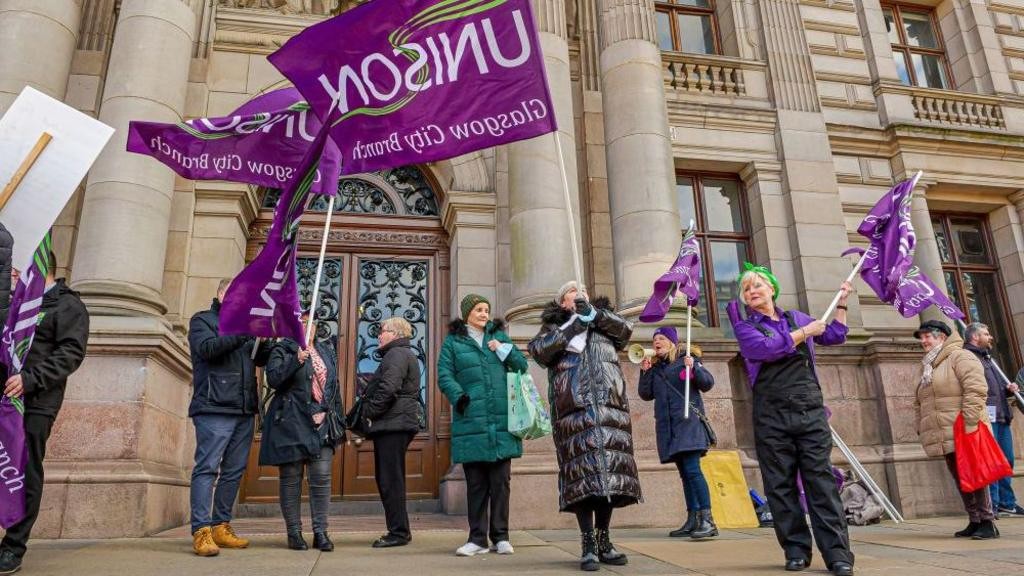
Glasgow City Council letting staff down with fire and rehire plans, worker says
Glasgow City Council announced the move after a stalemate in talks over a new salary structure to address equal pay issues.

Civil rights lawyer Ben Crump releases data from Nolan Wells’ cellphone
Messaging ‘very telling’, says Crump after grand jury said it found no evidence of criminal conduct in teen’s death Civil rights attorney Ben Crump released information from a forensic examination of Nolan Wells’ cellphone as well as details of the official autopsy on Thursday, just days after a Mississippi grand jury…

Noah Woods left playground through gap in fence, inquest hears
Noah's mother tells parents to "hold their children a little tighter and cherish every moment".

Pope warns against 'losing humanity' to AI machines
The pontiff delivered the warning on the first day of his trip to France on Friday.