

Swedish Study Links Lifetime Estrogen Exposure to Brain Vascular Health in Older Women
MedPage Today and a study published in Neurology describe associations between hormonal history and brain imaging findings, without establishing that hormone therapy prevents dementia.
Written with AI assistance from the reports named below. How we work
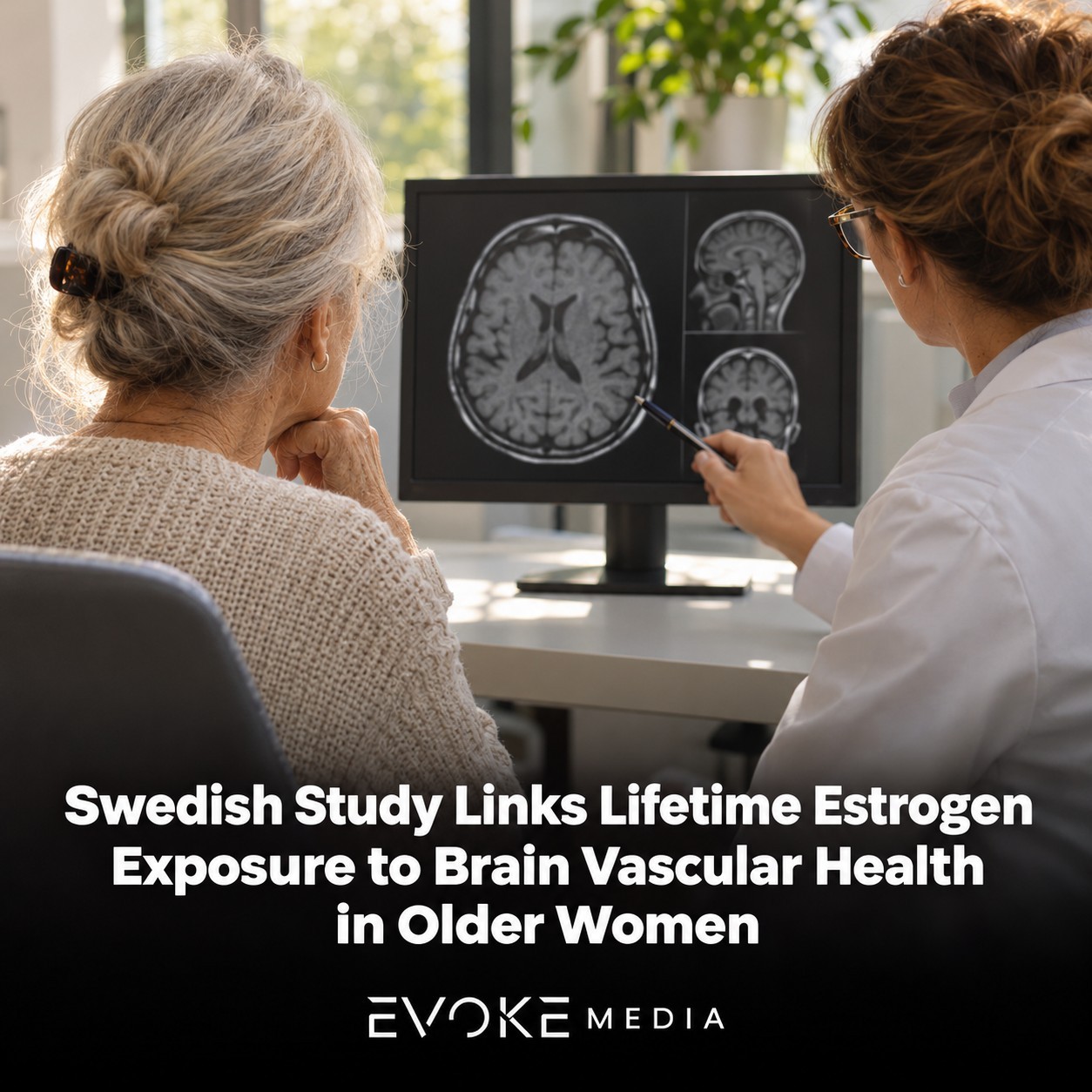
Longer lifetime estrogen exposure was associated with fewer signs of vascular injury in the brains of older Swedish women, according to MedPage Today and research published in Neurology.
The findings included associations with both a longer reproductive lifespan and previous menopausal hormone therapy. However, the observational study did not establish cause and effect, and the researchers said further studies are needed to determine possible cognitive effects.
The research involved 352 cognitively unimpaired women from the Gothenburg H70-1944 Birth Cohort who underwent brain MRI at age 70. Researchers examined their reproductive histories alongside measures of cerebral small vessel disease, white matter integrity and the thickness of brain regions vulnerable to Alzheimer’s disease.
Reproductive lifespan was calculated as the interval between first menstruation and menopause or ovary removal. Oral contraceptive and menopausal hormone therapy exposure were classified according to whether women had ever used them, the Neurology study explained.
MedPage Today reported that a longer reproductive span was associated with 8% lower odds of having two or more signs of cerebral small vessel disease. Menopausal hormone therapy was also associated with lower disease burden and greater white matter integrity.
Both sources described favourable imaging findings among women who had used oral contraceptives during their reproductive years and menopausal hormone therapy later. This group had the lowest small vessel disease burden and the greatest white matter integrity, according to MedPage Today.
The Neurology paper characterised the combined-exposure findings as exploratory. Its analysis found no multiplicative interaction between the treatments, although the patterns suggested potentially cumulative associations requiring validation in independent, more diverse populations.
Both sources also described an association between menopausal hormone therapy and greater cortical thickness in Alzheimer’s-vulnerable regions among women carrying APOE-ε4. The Neurology paper added an important qualification: this finding did not remain statistically significant after correction for multiple comparisons.
The paper reported that associations involving reproductive lifespan and oral contraceptive use also weakened after that correction, while the principal associations involving menopausal hormone therapy remained robust.
The accounts differed in their descriptions of follow-up findings. MedPage Today described longer estrogen exposure as associated with stable cortical thickness and white matter trajectories. The detailed Neurology analysis reported no association with rates of change in Alzheimer’s-related cortical thickness or white matter hyperintensity volume over five years among 205 women with follow-up MRI data.
MedPage Today separately reported that 286 women attended a follow-up examination. The Neurology paper distinguished the smaller group with longitudinal imaging data.
The findings sit within a mixed history of research on hormones and dementia. MedPage Today noted that the Women’s Health Initiative Memory Study reported increased probable dementia risk in women aged 65 or older receiving combined estrogen and progestin. It also described more recent studies associating estrogen-only therapy or earlier treatment initiation with more favourable outcomes.
Limitations of the Swedish study included reliance on participants’ recollections and indirect measures of estrogen exposure rather than individual hormone levels. The researchers could not assess how treatment formulation, dose, route or timing relative to menopause influenced the associations.
Anna Marseglia of Karolinska Institutet and colleagues emphasised the relevance of reproductive and hormonal history to research on brain ageing, MedPage Today reported. The Neurology paper called for further investigation of the vascular mechanisms involved and whether the imaging findings translate into cognitive benefits.
Sources
More coverage

Melbourne Donor Completes Visits to All 85 Australian Blood Donation Centres
A Melbourne police officer has completed his goal of donating at every Australian Red Cross Lifeblood donation centre, combining a commitment to helping patients with a decade-long travel challenge…

Midwives concerned over possible baby unit closures
The RCM union says possible closures in Norfolk would also affect patients in neighbouring counties.

Art is good for your health? Allow me a quick eyeroll | Emma Brockes
Some now suggest a monthly dose of art can boost wellbeing. But the last thing we need is another item on our to-do lists As the long autumn subsides and we finally head into winter, so we hit that point in the calendar when two rival theories of seasonal survival play out: one, the permission-giving invitation to…

Why a US-funded vaccine trial on babies was cancelled in Guinea-Bissau
The trial was condemned as "unethical" and "neocolonial" because half of the babies would not be given the vaccine.