

24 Hours Recap: Gulf Trade Rupture, Market Strain and Policy Turning Points
A rupture between the UAE and Iran reverberates through energy markets as North American trade talks, a major cancer trial, US health leadership and a NASA setback reshape the global agenda.
UAE Suspends Trade With Iran After Renewed Missile Fire
The United Arab Emirates suspended all trade, commercial exchanges and financial transactions with Iran after nationwide warnings were triggered by incoming ballistic missile fire. The measure followed the first such alarm in weeks and deepens Iran’s isolation amid US sanctions and a blockade. The UAE said the escalation threatened regional and international security, while Iran has accused Gulf states aligned with Washington of facilitating American military operations. Associated Press
The economic consequences could be substantial because the UAE was one of Iran’s largest trading partners before the war. World Trade Organization figures cited by AP show that the Emirates supplied more than 30% of Iranian imports in 2024, worth roughly $21 billion, and received almost 13% of Iranian exports, worth about $7 billion. That relationship gave Tehran access to a major commercial and financial hub even while other channels were constrained.
The rupture also increases uncertainty around the Strait of Hormuz. MarineTraffic data cited by AP showed only ten vessels transited the strait on Tuesday, less than one-tenth of the normal prewar volume. The reduced traffic, renewed missile threat and embargo together link the security crisis directly to energy supply, shipping costs and the wider global economy. Reuters reporting separately described the UAE action as a suspension of all financial and economic transactions until further notice. Reuters report
Oil Shock Adds Pressure to Global Bond Markets
Oil prices rose sharply after the renewed Gulf missile threat, adding to inflation concerns and pressure on government bonds. Brent crude gained more than 2% as investors assessed both the UAE-Iran rupture and the risk of further disruption around Hormuz. US stocks moved lower, with the S&P 500 and Nasdaq declining and the Dow falling by hundreds of points during Thursday trading. Associated Press market update
The move in oil compounded a broader bond-market selloff driven by concern over government debt and inflation. The US Treasury Department responded by saying it would more than double its purchases of longer-term government bonds through buybacks. That announcement initially pushed longer-term yields lower, offering some relief after yields in several markets reached multiyear or multidecade highs. Associated Press analysis
Bond yields matter beyond government financing because they influence mortgages, business borrowing and the relative appeal of stocks. A sustained oil-price increase can reinforce inflation expectations, which in turn makes investors demand higher yields to hold long-term debt. The Treasury intervention can improve market liquidity, but it does not remove the underlying geopolitical and fiscal pressures that produced the selloff.
US And Canada Move Toward A Trade Deal With Key Terms Unsettled
The United States and Canada moved closer to a trade agreement intended to avert threatened 50% US tariffs on about $20 billion of Canadian imports. President Donald Trump described the emerging agreement as fair to both countries, while a senior Canadian official called it a good deal for Canada but emphasized that negotiations were not complete. The threatened tariffs were postponed until early Saturday to allow work on the documents to continue. Associated Press
The unresolved issue is how the two governments reconcile their public descriptions of agricultural access. Trump said tariffs facing US farmers would fall to zero, but Canadian officials said the country’s dairy supply-management system was not on the table and would remain protected. Canada also presented the arrangement as preserving favorable access to the US market, protecting jobs and providing greater economic certainty.
The talks sit within a larger reassessment of the bilateral relationship. Several Canadian premiers signaled that an agreement would not restore the old status quo, even as provincial governments considered steps such as returning US alcohol to store shelves. Earlier Reuters reporting showed both governments were working toward an August deadline while debating concessions, making the temporary tariff pause a milestone rather than a final settlement. Reuters background
Personalized mRNA Cancer Treatment Meets A Key Trial Goal
Moderna and Merck said their personalized mRNA treatment for melanoma met the main goal of a late-stage trial. The experimental therapy, intismeran, is tailored to mutations found in an individual patient’s tumor and was tested in combination with Merck’s immunotherapy Keytruda. The companies said patients receiving the combination lived longer without their cancer returning or spreading than those receiving Keytruda alone. Associated Press
The announcement is important because an approved product would represent a new use of mRNA technology beyond infectious-disease vaccines. Axios reported that the study involved more than 1,100 people whose high-risk melanoma had been surgically removed. The result supports the strategy of training the immune system against molecular features specific to each patient’s cancer. Axios
Important evidence remains outstanding. The companies did not disclose how long patients remained free of recurrence or metastasis, and they did not say whether the treatment improved overall survival. They plan to present detailed results at an international medical meeting, meaning the announcement should be understood as positive top-line evidence rather than a completed regulatory judgment.
Trump Selects Heidi Overton To Lead The FDA
President Donald Trump selected Dr. Heidi Overton, a White House domestic-policy official and physician, to lead the US Food and Drug Administration. The position requires Senate confirmation. If confirmed, Overton would inherit an agency responsible for medicines, vaccines, medical devices, food safety and tobacco regulation after former commissioner Dr. Marty Makary resigned in May. Associated Press
Overton has participated in several of the administration’s health initiatives, including drug-pricing announcements and a vaccine order. Her nomination is likely to receive close scrutiny because she would need to balance the administration’s push for faster approvals and lower prices with scientific review standards and competing priorities inside the Department of Health and Human Services.
The confirmation debate is already exposing those tensions. Republican Senate health committee chair Bill Cassidy said he respected Overton’s medical background but had strong concerns about her managerial experience and role in the vaccine order. Democrats criticized her views on abortion medication, while the next commissioner will also face unresolved work involving ultraprocessed foods, antidepressants, vaccines, electronic cigarettes and foodborne-illness outbreaks.
Rescue Mission For NASA’s Swift Observatory Is Abandoned
NASA and Katalyst Space Technologies called off an attempt to rescue the aging Swift Observatory after the mission’s Link spacecraft developed continuing control problems. Swift, which has spent more than two decades studying gamma-ray bursts and other violent cosmic events, is losing altitude and is now expected to reenter Earth’s atmosphere later this year, though not before October. Associated Press
NASA paid Katalyst $30 million to try to capture Swift and move it into a higher, longer-lasting orbit. The Link spacecraft launched in early July but entered an uncontrolled spin several weeks later. Controllers slowed the tumble, yet problems with pointing and positioning persisted, leading the company to rule out an attempted capture.
The outcome closes an unusually ambitious effort to extend the life of a productive spacecraft already in orbit. Swift’s decline accelerated because intense solar activity increased atmospheric drag at its altitude. Its expected loss underscores both the scientific value of servicing aging observatories and the technical difficulty of rendezvous and recovery operations when the rescue vehicle itself cannot be controlled reliably.
More coverage
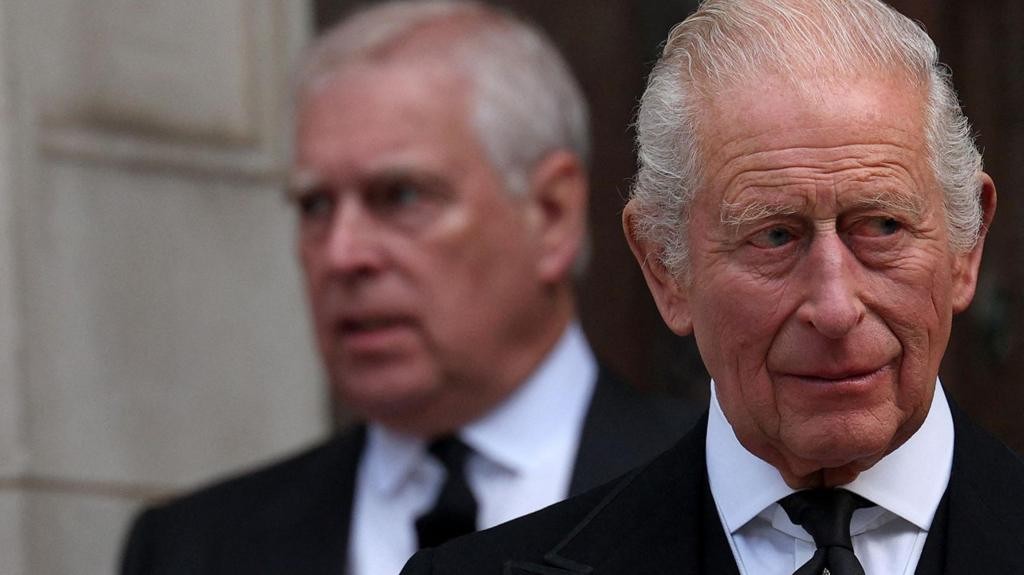
King's funding for Andrew not to be used for legal action against police
Andrew Mountbatten-Windsor is taking action over search warrants issued ahead of his arrest in February.
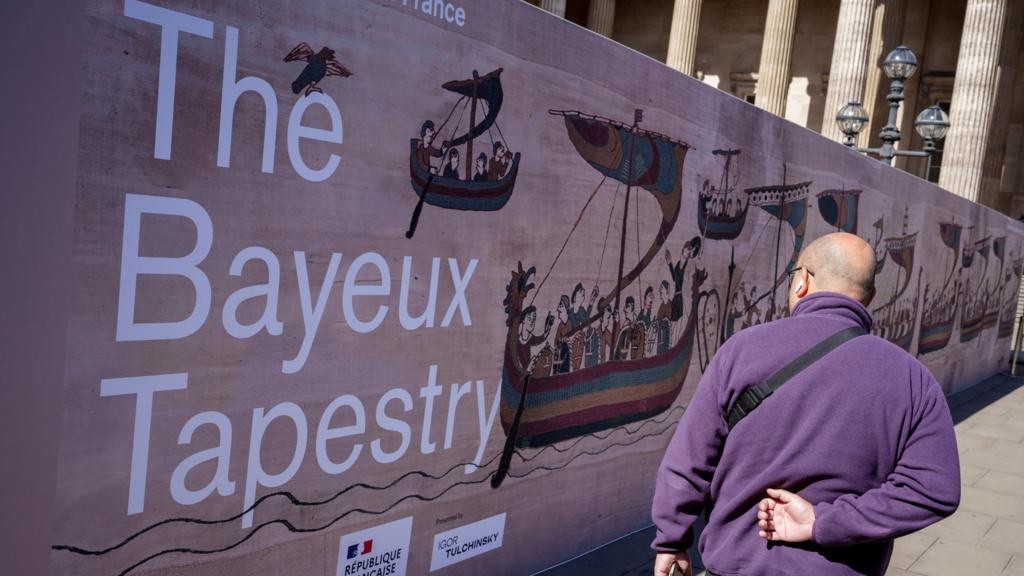
British Museum boss 'sorry' for Bayeux Tapestry visitor issues
Changes to how visitors see the Bayeux Tapestry exhibition were made after concerns over long queues and overcrowding.

Man who killed dog walker should be deported, says judge
Dawood Safi killed Wayne Broadhurst and injured two others in a knife attack in west London.

Rescued Springer Spaniel Katy Finds a Home in North Yorkshire
Katy, a springer spaniel rescued from a home where 84 dogs were living, has been adopted by Wendy and Lindsay Cann in Cowling, North Yorkshire, BBC News reported. Both supplied BBC reports describe…