

Pancreatic Cancer Pill Trial Reports Tumour Shrinkage, With Longer Follow-Up Needed
BBC News and The Guardian reported encouraging results for daraxonrasib, while doctors cautioned that it cannot yet be considered a cure.
Written with AI assistance from the reports named below. How we work
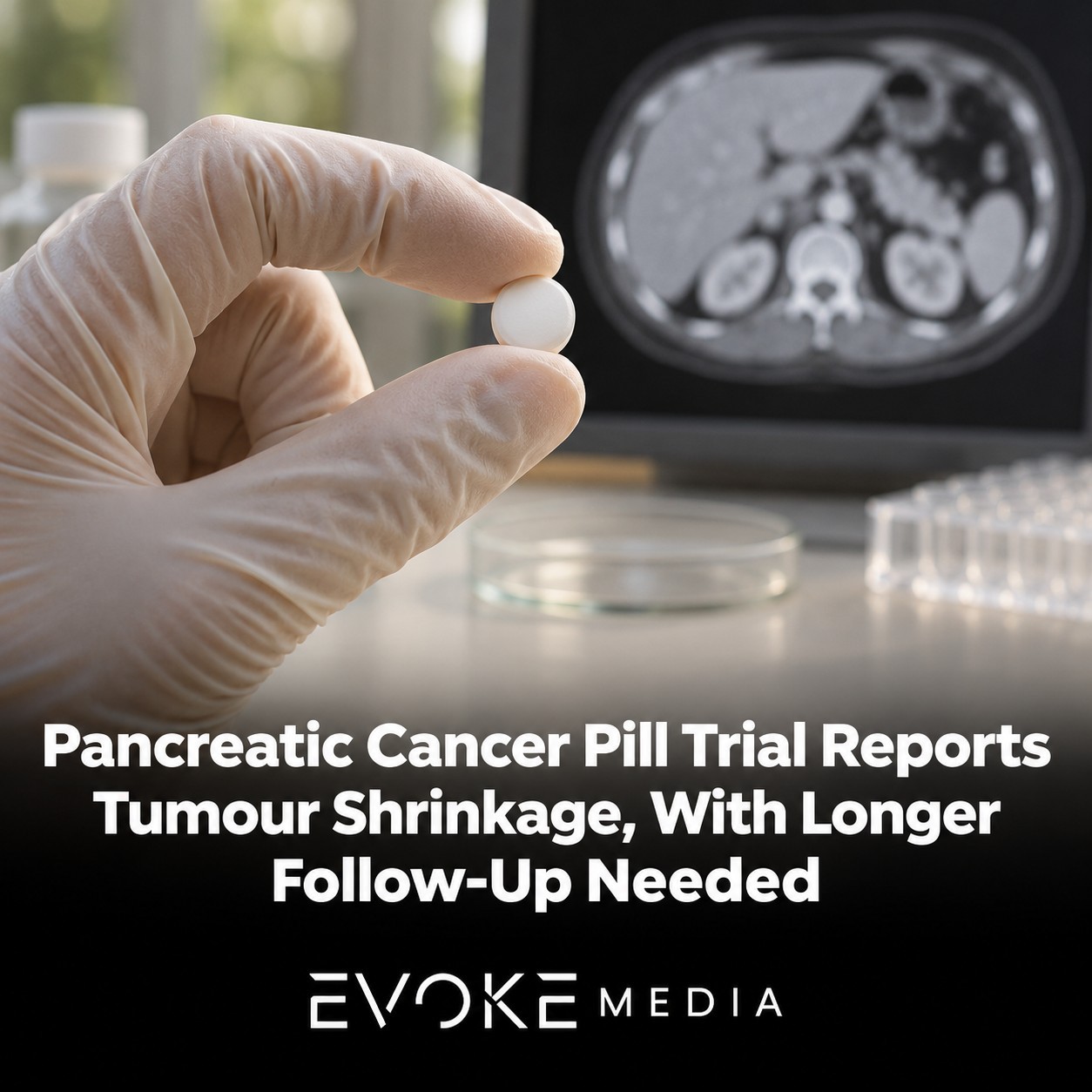
An experimental daily pill has shown an ability to shrink pancreatic tumours and make them undetectable in some patients, BBC News and The Guardian reported.
The drug, daraxonrasib, was tested in 61 patients recently diagnosed with advanced pancreatic cancer that had spread elsewhere in the body, according to The Guardian. Doctors described the findings as encouraging but said they do not yet know how long the treatment can control the disease.
BBC News described tumour shrinkage and possible elimination in some patients. The Guardian provided more detailed results: tumours stopped growing in 90% of participants, while just over 60% experienced shrinkage or disappearance.
For about 8% of patients—approximately one in 12—tumours became undetectable on CT scans, The Guardian reported. Doctors cautioned that the pill cannot yet be regarded as a cure.
The Guardian reported a median follow-up of 18 months. Some patients did not experience a return of their cancer during follow-up, and longer studies are planned to examine whether the responses amount to remission.
A year after treatment began, 76.6% of participants were alive. The Guardian contrasted that figure with the usual one-year survival rate of 40–45% among patients receiving chemotherapy alone.
The findings were presented by Dr Wungki Park, a gastrointestinal medical oncologist at Memorial Sloan Kettering Cancer Center in New York, at the EORTC-NCI-AACR Symposium on Molecular Targets and Cancer Therapeutics in Barcelona, according to The Guardian.
Park described both a higher proportion of patients responding and deeper tumour responses. He also reported a near doubling in the duration of disease control.
Daraxonrasib is a KRAS inhibitor. The Guardian explained that it targets and switches off certain mutations that drive tumour growth and occur in most pancreatic cancers.
The results concern a disease with particularly poor survival. According to The Guardian, pancreatic cancer has the lowest survival rate among common cancers in the UK. Only about 3% of patients survive five years once it has spread to other organs.
Michelle Mitchell, chief executive of Cancer Research UK, welcomed the findings while emphasising that further research is necessary. She said additional trials are required before the treatment can be assessed for NHS use, The Guardian reported.
Mitchell also highlighted the possibility of investigating treatments for other cancers carrying KRAS mutations. That remains a research prospect rather than an established result.
The immediate findings demonstrate tumour responses in patients with advanced pancreatic cancer. Whether those responses endure, produce lasting remission or establish longer-term survival benefits remains subject to further investigation, according to The Guardian.
Sources
More coverage

Toronto-Area Chef Turns Food Bank Donations Into Weekly Lunches for 100
A Toronto-area private chef is preparing weekly lunches for 100 people using ingredients donated to a local food bank, TODAY and Good News Network reported. Maddy Goldberg volunteers her time every…

Private dentists too expensive for millions, watchdog warns
The Competitions and Market Authority says reforms are needed to make sure people get a fair deal.
Family Is Thankful Their Baby, Given Weeks to Live on Christmas Eve, Now Brain Cancer-Free
An infant girl with weeks to live from aggressive brain cancer has made a full recovery after her case arrived at the desk of a hospital which had just finished a rigorous study on her form of cancer. The trial had run at St. Jude Children’s Hospital—one of 15 institutions that the family sent the […] The post Family…

Contraceptive pill usage in Great Britain fell drastically in last decade, research finds
Survey published in Lancet reveals ‘hormonal hesitancy’ on the rise – with implants and injections also increasingly spurned The number of young women using hormonal contraception fell drastically in the past decade, with social media fuelling the “hormonal hesitancy” phenomenon. New findings from the fourth National…