

MIT Researchers Receive Pritzker Prize for AI-Assisted Antibiotic Discoveries
MIT News reported that Regina Barzilay and James Collins have received the 2026 award for research combining artificial intelligence with laboratory testing to identify antibacterial candidates.
Written with AI assistance from the reports named below. How we work
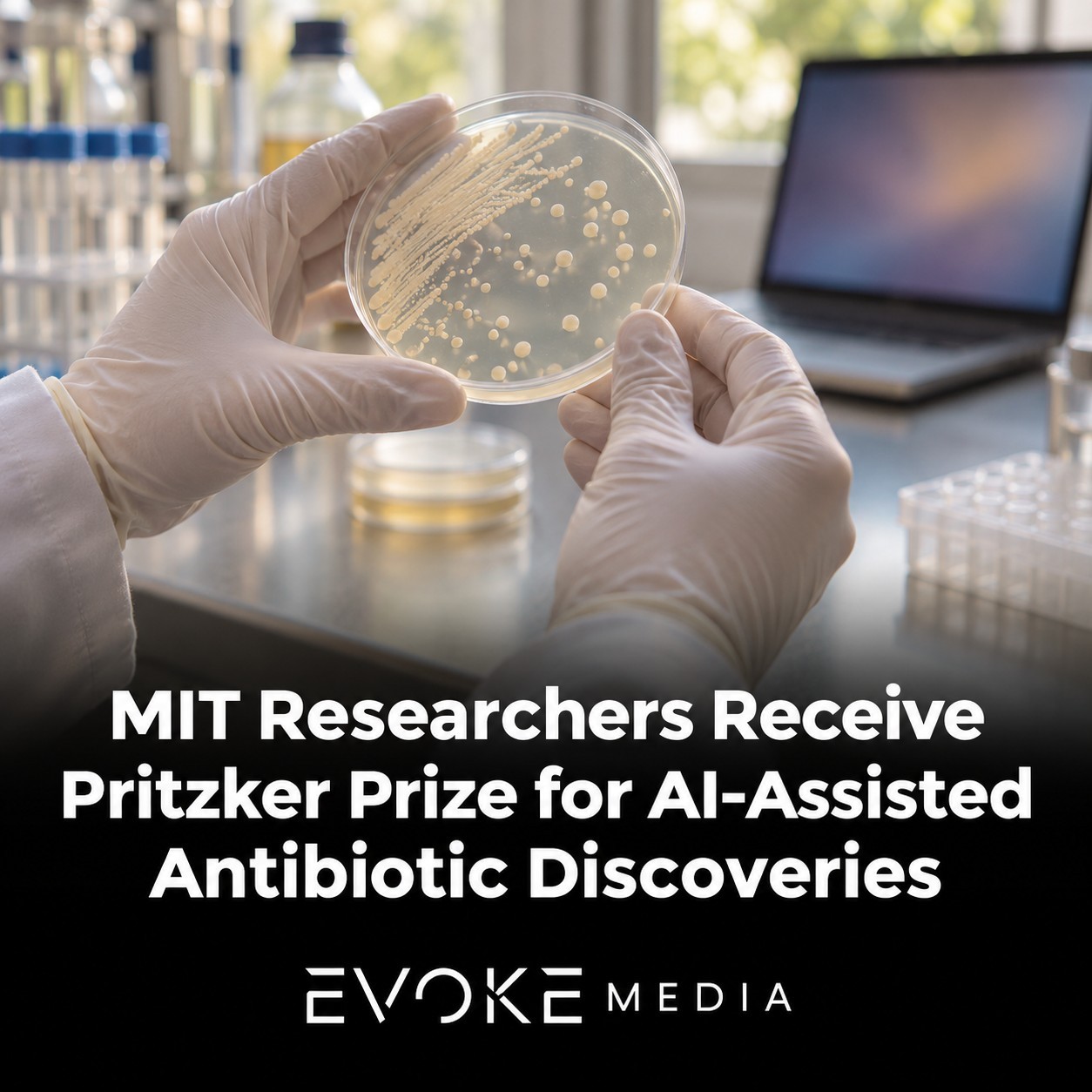
MIT professors Regina Barzilay and James Collins have received the 2026 Pritzker Prize for AI in Science Research Excellence for their joint work on AI-enabled antibiotic discovery, MIT News reported.
The award recognises research integrating deep learning, bioengineering and experimental validation to identify antibacterial candidates against drug-resistant pathogens.
Established in 2024 by the University of Chicago in partnership with Caltech, the prize honours contributions that advance artificial intelligence alongside the natural sciences or engineering, according to MIT News.
Barzilay is MIT’s School of Engineering Distinguished Professor of AI and Health, while Collins is its Termeer Professor of Medical Engineering and Science. Both are faculty co-leads of the Abdul Latif Jameel Clinic for Machine Learning in Health and affiliates of the MIT Schwarzman College of Computing and School of Engineering.
Their collaboration produced a paper published in Cell in 2020 with first author Jonathan Stokes, then an MIT postdoctoral researcher. MIT News described the paper’s subject, halicin, as the first antibiotic discovered through artificial intelligence.
A deep learning model trained on 2,500 molecules identified halicin, which had previously been investigated as a possible diabetes drug. Laboratory testing found that it could kill antibiotic-resistant bacteria including Clostridium difficile, Acinetobacter baumannii and Mycobacterium tuberculosis, according to MIT News.
The outlet reported that a discovery process previously taking years was completed within weeks. The findings demonstrated an application of AI to identifying antibiotics amid concern about antimicrobial resistance.
Halicin’s name refers to HAL 9000, the fictional artificial intelligence system in Stanley Kubrick’s 1968 film 2001: A Space Odyssey, MIT News noted.
The researchers subsequently worked with Stokes, now an assistant professor at McMaster University, to identify another antibiotic candidate, abaucin, using machine learning in 2023.
Unlike broad-spectrum halicin, abaucin demonstrated activity against a single species, A. baumannii. MIT News described that narrower activity as an advantage because it minimises the likelihood of encouraging resistance and harming beneficial gut bacteria.
The outlet reported that A. baumannii is found in hospital environments, including on doorknobs, and in wounds sustained by US soldiers stationed in Iraq and Afghanistan.
Collins contrasted the AI-assisted approach with conventional antibiotic discovery, which he described as dependent on slow, expensive and unpredictable trial-and-error methods. According to MIT News, he sees generative AI expanding the technology’s role from identifying candidates to helping design them.
Barzilay offered a more cautious assessment of the wider drug-discovery process. Despite progress in molecular modelling, she said the field remains at an early stage and AI currently automates only portions of the development pipeline.
According to MIT News, Barzilay identified the construction of realistic AI models of human biology as a necessary area of further work. Her assessment distinguished the researchers’ antibiotic discoveries from a complete transformation of how drugs are developed.
The prize recognises the combination of computational identification and experimental testing behind the collaboration, with halicin and abaucin demonstrating different approaches to finding compounds active against resistant bacteria.
Sources
More coverage

Elon Musk’s nearly half a billion dollars in midterms spending was a flop
The tech billionaire set spending record as he poured $446m into campaigns for failed Republican candidates Elon Musk set a record for election spending this year after pouring nearly half a billion dollars into backing Republicans in the US midterm elections . It turned out to be a poor investment. The SpaceX and…

Datacenters were on the ballot. US voters rejected them
Voters approved nearly every datacenter moratorium that was on the ballot, dozens in total in Tuesday’s elections Track live results from all 50 states Send us your questions about the US midterms results and Democrats’ ‘blue wave’ There were three big losers in Tuesday’s midterm elections in the US: Donald Trump…

Scare campaigns: Victoria’s major parties trade blows over AI-generated videos of leaders in election ads
Transparency and advertising experts say trust in politics could be further eroded as a result of ‘lies, deepfakes and AI-generated politicians’ Get our daily political email , free app or daily news podcast It’s the night of Halloween and Jess Wilson has appeared on social media feeds with a warning about a scary…

UK government considers smart glasses ban over secret filming concerns
Minister hints at restriction on selling technology ‘to certain users’ amid worries over surreptitious filming of women The government is considering placing restrictions on smart glasses amid concerns the technology is being used to surreptitiously film women, a minister has said. Speaking in the House of Commons…