

Grottole Biomethane Plant Turns Farm Byproducts Into Renewable Gas
Good News Network reported that an Italian biomethane plant is ramping up towards annual output equivalent to the average gas consumption of approximately 3,200 households.
Written with AI assistance from the reports named below. How we work

A biomethane plant in Grottole, southern Italy, has begun operating, using agricultural byproducts to produce a substitute for natural gas, according to Good News Network. Its anticipated annual output is 45 gigawatt-hours, equivalent to the average gas consumption of approximately 3,200 Italian households.
Good News Network identifies the developer as Axpo and places the plant in Basilicata. It reports that Axpo acquired the ready-to-build project in 2024, switched it on in July and was halfway through a six-month ramp-up period.
According to the outlet, the plant processes byproducts from regional farms into low-carbon gas and fertiliser. Good News Network reported anticipated avoidance of around 9,000 tons of direct carbon dioxide emissions annually compared with natural gas use. These figures describe expected output and emissions savings, rather than completed annual results.
Good News Network places the development within Italy’s wider biomethane industry. Good News Network reported that national production capacity grew from 0.25 billion cubic metres in 2022 to roughly 1.6 billion cubic metres in 2026. It also reported that natural gas accounts for 46% of Italy’s electricity generation and that utilities maintain substantial gas infrastructure across the country.
According to the outlet, Italy produces little natural gas domestically and is seeking to use existing infrastructure to expand biogas production. The report presents the Grottole project as supporting decarbonisation, energy security and the circular economy.
Good News Network attributed Axpo’s commitment to the project to Andy Heiz, its head of Generation & Distribution and deputy CEO, who described it as part of the company’s renewable-energy growth strategy. The outlet also reported that Axpo operates biofuel plants in Spain, Italy, Switzerland and Poland.
Sources
More coverage

'The first species we might be able to communicate with, interact with vocally, might be a bird': An animal researcher explains how she decoded birdsong
Julie Elie , an ethologist at the University of California, Berkeley, tells Live Science about using AI to decode the vocalizations of zebra finches.

Newly described insect may live its whole life on a spider’s web
A species of “web-loving bug” from China lives on a spider's web and seems to follow its arachnid host around. The insect may be too small for the spider to bother attacking
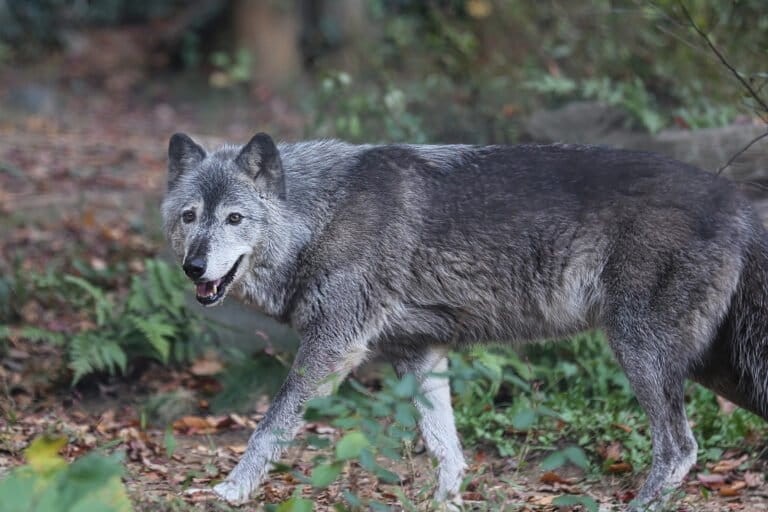
California’s Wolf Divide
After nearly a century’s absence, gray wolves are recolonizing California, altering ecosystems and landscapes in the U.S.’s most populous state. Mongabay’s Spoorthy Raman examines how this change is playing out: conservationists welcome the wolves’ return, ranchers vilify them due to livestock losses, and others seek…

10 Million Hectares of Sal Forests: 7 Ways One Tree Supports India’s Rural Economy
A meal served on a leaf plate, a silk saree woven from wild silk , and incense burning during a prayer may appear like three unrelated parts of everyday life. But they share an interesting connection. Each, in its own way, can be traced back to the forests and a tree that has supported communities for generations…