

BepiColombo Reaches Mercury Orbit After Eight-Year Journey
BBC News reported that the European-Japanese mission has entered orbit around Mercury, advancing research into the planet’s surface, polar ice and unusually large metal core.
Written with AI assistance from the reports named below. How we work
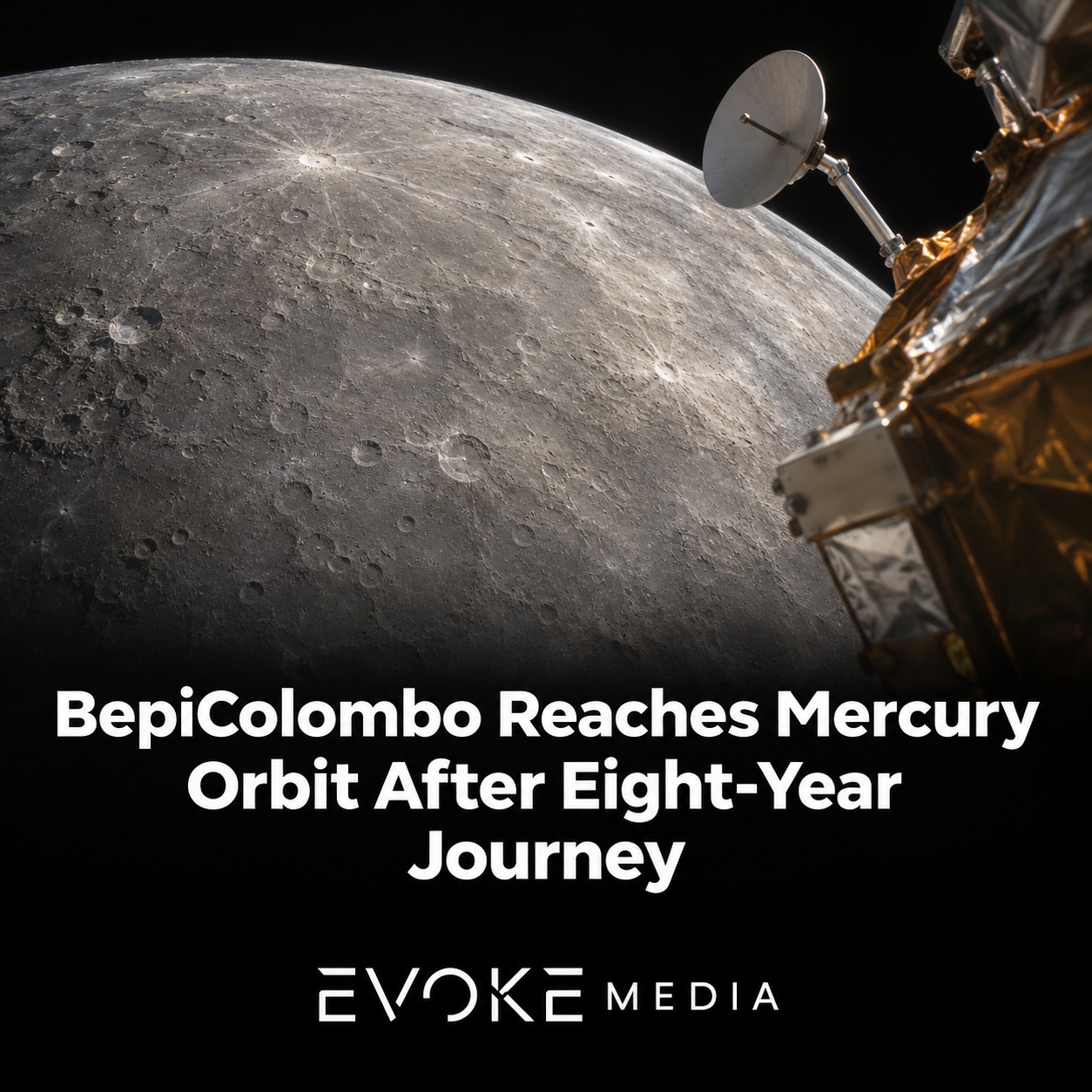
BepiColombo has entered orbit around Mercury after an eight-year journey covering almost six billion miles, BBC News reported.
The mission, a collaboration between the European Space Agency and Japan’s space agency, JAXA, carries two orbiters equipped to investigate the planet from different distances. Its research objectives include examining polar ice, unexplained surface hollows and Mercury’s large metal core.
According to BBC News, the European Space Agency confirmed contact with the probe and said telemetry showed it was orbiting Mercury. A software issue caused its thrusters to fire for less time than planned during the final manoeuvre, which had been intended to last 37 minutes.
The arrival followed a longer journey than originally expected. BepiColombo launched from French Guiana in 2018, but a propulsion-system problem extended its planned seven-year voyage by a year.
Reaching Mercury required the spacecraft to slow sufficiently to enter orbit while travelling deep into the Sun’s gravitational influence. BBC News reported that its route included one loop around Earth, two around Venus and six around Mercury.
The spacecraft now faces an environment marked by intense solar radiation and extreme temperatures. Mercury, the closest planet to the Sun, can reach 430C before temperatures fall to minus 180C, according to the broadcaster.
Despite those conditions, ice exists in craters near the planet’s poles. Investigating that ice is among the mission’s scientific priorities.
Another focus is the thousands of shallow, steep-sided hollows scattered across Mercury’s surface, often in clusters. BBC News reported that these features are approximately 100,000 years old and are distinct from the impact craters formed by colliding space rocks. Their nature and formation remain uncertain.
Mercury’s interior presents another question. Although the planet is only slightly larger than the Moon, it contains a large metal core, according to BBC News.
Emma Bunce, a Leicester University professor and principal investigator on the mission, outlined several possible explanations to the broadcaster. A large collision might have removed much of the planet’s outer material, or repeated collisions could have stripped away its mantle and crust over time. Alternatively, Mercury might have formed in a metal-rich region of the early Solar System.
Those explanations remain possibilities rather than established findings. Bunce described understanding Mercury’s formation, evolution and interaction with the Sun as central reasons for studying the planet.
BepiColombo’s two spacecraft have separate roles. According to BBC News, the ESA orbiter is intended to examine the surface at close range, while JAXA’s spacecraft is designed to observe Mercury from farther away. Separation is scheduled for a few weeks after arrival.
The mechanism connecting them has remained securely attached throughout launch and the long journey. Jessica Marshall, a systems engineer at Airbus, which built the spacecraft, told BBC News that a specially designed spring mechanism must release gently after years of radiation exposure and temperature changes. Its release also introduces the rotation needed to start one spacecraft spinning.
BepiColombo follows two earlier NASA missions to Mercury. Mariner 10 made three flybys during the 1970s, while Messenger arrived in 2011 and remained in orbit for four years, BBC News reported.
The new mission brings two instrument-equipped orbiters to a planet whose volcanic features, cliffs, craters and unexplained hollows remain subjects of investigation. Its confirmed orbital arrival completes the journey to Mercury ahead of the spacecraft separation and scientific work described by BBC News.
Sources
More coverage

Water levels fell sharply in world’s rivers and lakes in two hottest years on record, study finds
Researchers say effects particularly felt in South America where levels plunged even as some areas had extreme rain Extreme global heat caused an unprecedented decline in the water levels of lakes, rivers and reservoirs around the world in 2023 and 2024, an international study has found. The analysis of global water…

Can Elon Musk really put AI datacentres in space? - The Latest
The Trump administration has approved Elon Musk’s plan to create datacentres in space. US federal regulators have authorised the launch of one million Starmind orbital satellites, which are built by Musk’s SpaceX, to process data in space. Supporters argue the project will be more energy-efficient and reduce the…
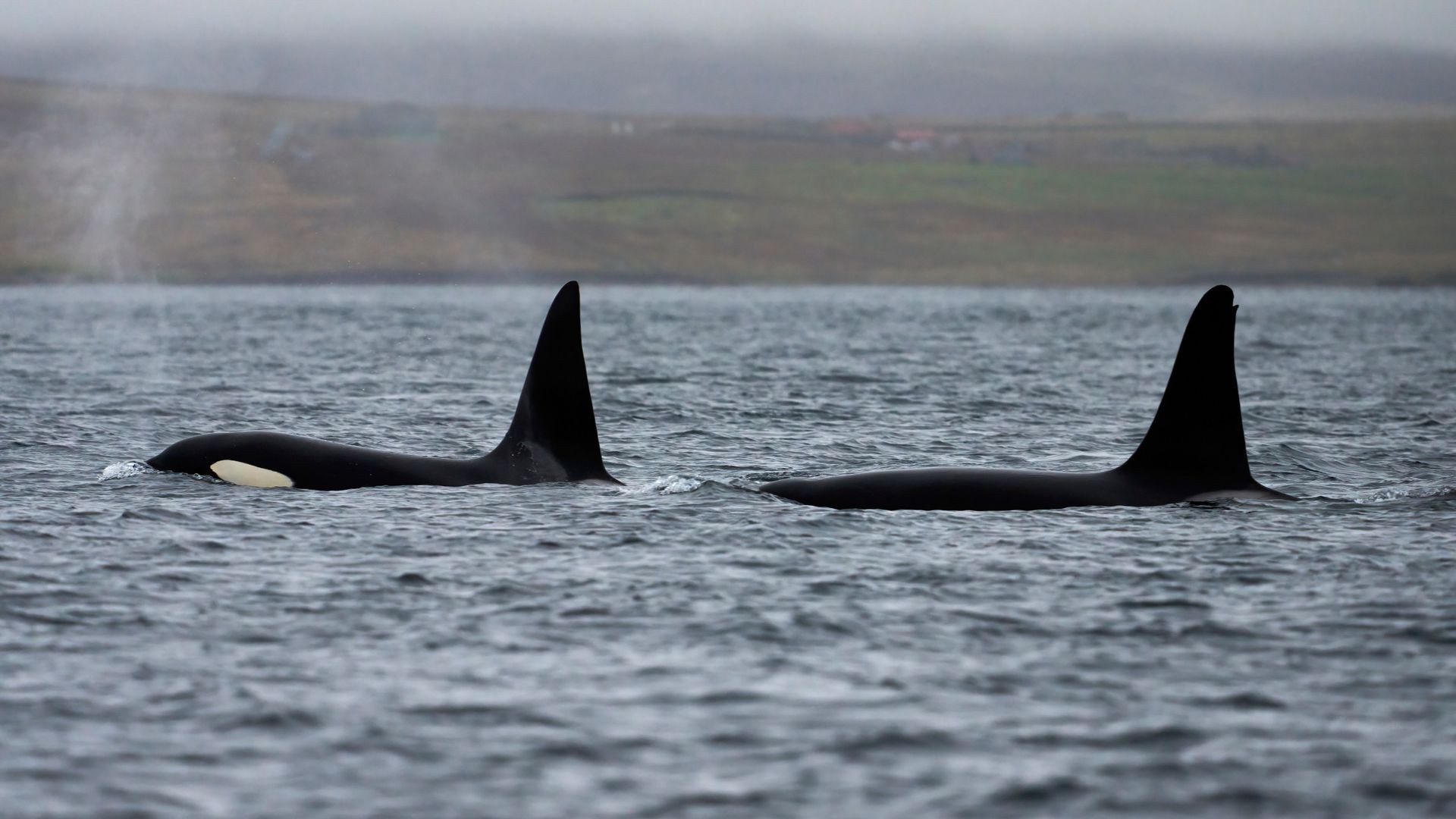
Oldest male orca on record may have been identified thanks to historical atomic bomb testing
Researchers might have identified the oldest male orca ever recorded after testing for radioactive traces of atomic bombs in the teeth of whales stranded in Scotland.

Moss Offers New Ways to Green Buildings and Monitor Urban Pollution
Moss is being used to add greenery to urban structures and investigated as a tool for monitoring air pollution, according to separate accounts from Pragmatika and the United Nations Economic…