

Arm Chief Highlights AI’s Medical Potential as Researchers Stress Evidence and Data
Rene Haas’s claims about AI and cancer research drew coverage alongside scientific cautions, examples of diagnostic use and constraints on computing supplies.
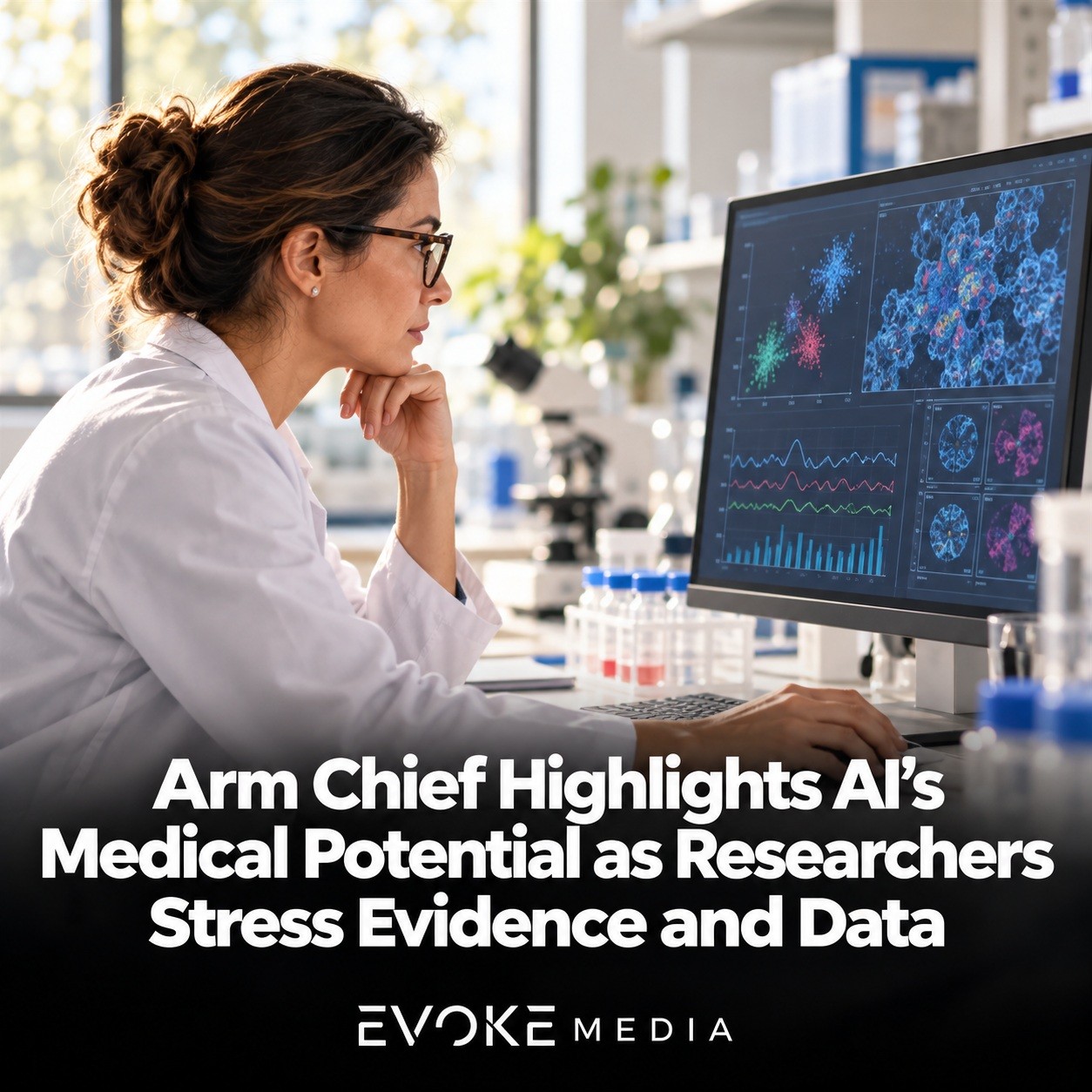
Arm Holdings chief executive Rene Haas believes artificial intelligence could help find a cure for cancer within his lifetime, BBC News, The Guardian and Yahoo Finance reported. His remarks describe an expectation, not an announced treatment or demonstrated cure.
BBC News and The Guardian reported that Haas considers modelling how cancer affects a DNA marker beyond the capabilities of both humans and current AI computers. He argued that increasingly sophisticated computers and models could address that complexity. Yahoo Finance additionally reported his view that AI could shorten drug discovery and testing.
The supplied Yahoo Finance account included cautions absent from the Guardian excerpt: medical researchers describe cancer as more than 100 diseases that vary between patients. It reported that AI can help identify research targets and predict drug behaviour, but evidence of clinically relevant impact remains limited. Differences between human bodies also complicate predictions about how potential drugs behave in patients.
BBC News reported a different emphasis from Prof Chris Bakal of the Institute of Cancer Research, London, who is also CEO of Sentinal4D. Bakal said his laboratory trains AI using data generated from patient samples rather than information scraped from the internet. He stressed the importance of appropriate measurements and said this work does not require a giant data centre.
The Guardian supplied an example of existing diagnostic use, reporting that the NHS said more than four million patients received faster lung diagnosis following funding for AI-powered X-ray tools. That account concerns diagnosis, rather than evidence that AI has cured cancer.
Computing supplies were another focus of the coverage. BBC News, The Guardian and Yahoo Finance reported Haas’s concerns that chip shortages were restricting AI’s development. Yahoo Finance said demand from companies planning multi-gigawatt data centres was competing for chips needed for applications including cancer research and humanoid robots.
According to Yahoo Finance, new semiconductor factories can cost tens of billions of dollars and take two or three years to construct. Its account also cited warnings from Micron executive Manish Bhatia about memory manufacturing capacity being diverted towards AI, and from Qualcomm chief executive Cristiano Amon about memory shortages and price increases affecting the handset market.
Yahoo Finance separately reported environmental and resource concerns surrounding US data centres. It cited a Gallup survey of 1,000 US adults, published in May, in which seven in 10 opposed local construction of AI data centres and nearly half were strongly opposed.
BBC News and The Guardian also covered Haas’s expectations for humanoid robots, including machines that can learn and be reprogrammed for different tasks. BBC additionally reported his view that estimates of wholesale job replacement were overstated. These were his assessments, not reported outcomes.
BBC said Arm’s technology was used in half of AI data centres worldwide, according to Haas. It also reported that Meta requested the Arm AGI chip and that Haas described more than $2 billion in demand since its March launch.
The Guardian reported that Arm retains its global headquarters in Cambridge despite its New York listing, employs more than 7,000 people and has approximately 500 users of its chip designs. BBC reported Haas’s scepticism about building chip factories in the UK, citing their expense and requirements for specialised workers, resources and an established industrial ecosystem.
Sources
- BBC News: AI will cure cancer in our lifetime, claims boss of UK chip giant
- The Guardian: AI will help find cure for cancer ‘within our lifetimes’, says Arm Holdings chief
- Arm's CEO says AI could cure cancer, but data centers are creating a bottleneck
- AI will help find cure for cancer ‘within our lifetimes’, says Arm Holdings chief
- AI will cure cancer in our lifetime, claims boss of UK chip giant
More coverage

What voters in 6 key states could tell us about the 2026 midterms
Morning Edition is heading to Maine, Texas, North Carolina, Georgia, Ohio and Michigan to hear what voters say is shaping their choices ahead of the midterm elections.

As Taiwan expands Arizona chip plant, China warns against developing political ties
The world's biggest chipmaker now manufactures at scale in Phoenix, as well as Taiwan. China is warning political leaders in Arizona to not get too friendly.

ASOS app users receive push notifications apparently sent by hackers
Dozens of people appear to have received a strange message from the clothing and beauty store's app.

Disney, ABC battle Trump's FCC in court over free speech protections
President Trump has repeatedly called for Disney's ABC to fire late night comedian Jimmy Kimmel, for mocking him. Trump has also routinely denounced ABC's The View , accusing it of being unfair.