

Arcadia Microforest Combines Wildlife Habitat With Community Science
Happy Eco News reported that a California homeowner’s water-smart microforest supports wildlife habitat, monitoring projects and wider conservation participation.

A homeowner in Arcadia, California, is turning his entire yard into a water-smart microforest intended to support wildlife and conserve resources, according to Happy Eco News. The report describes the Arcadia Ecohome Microforest as a residential setting for habitat maintenance, community science and conservation activities.
Happy Eco News reported that the site is a National Wildlife Federation Certified Wildlife Habitat, a Certified Monarch Waystation and a Certified Pollinator Habitat. Activities associated with the California Institute of Environmental Design & Management, or CIEDM, include planned landscape rewilding and cleanup work to maintain and improve habitat for monarchs, other butterflies and pollinators.
The report’s author described making a Green Hour pledge through a National Wildlife Federation initiative, committing to spend two hours each day at the microforest. The pledge accompanied local, community and citizen science activities intended to mark World Nature Conservation Day and Earth Overshoot Day.
According to Happy Eco News, World Nature Conservation Day is observed on July 28, while Earth Overshoot Day falls on July 30 in 2026. The latter marks the point when humanity’s annual demand for ecological resources and services exceeds what ecosystems can regenerate during that year. The author presented the microforest activities as a local response to those observances.
The microforest is also registered for community science monitoring through Project Phoenix 2026, the outlet reported. That project examines how smoke affects birds in neighbourhoods across three U.S. West Coast states. Planned bird walks and bioblitz activities at and around the site would produce observations to be recorded and shared through eBird.
Happy Eco News also described participation in the 10th anniversary of the International Monarch Monitoring Blitz, a North American community science initiative. At the microforest, participants plan to document monarch observations and interactions, alongside the growth of tropical milkweed at the certified Monarch Waystation. Information would be shared through platforms including iNaturalist and Project Noha.
The report includes a photograph of tropical milkweed growing in a repurposed container, described as a host plant for monarch butterflies. The author linked such observations to community science participation, explaining that records of birds, monarchs and seasonal changes can contribute to a wider body of knowledge.
Beyond the residential habitat, the author reported supporting several conservation campaigns. These included a Nature for All message backing continued protection of the San Gabriel Mountains National Monument, north of Arcadia, and a Wilderness Society campaign seeking continued protection of New Mexico’s Greater Chaco region from new oil and gas drilling.
According to Happy Eco News, the author also joined a Conservation International campaign supporting forest protection and planned to share experience managing and rewilding the microforest. A separate Stand.earth petition called on British Columbia and Canadian federal authorities to reject the Tilbury LNG expansion plan to protect coastal and marine wildlife in the Salish Sea.
The outlet reported that CIEDM partners with IUCN’s Nature for All initiative. The author also described participating in IUCN’s Research Taskforce and Inter-commission Human-nature Connectedness Task Force, with meetings focused on research and capacity building scheduled for August.
Happy Eco News presented these activities as complementary forms of participation, connecting local habitat care with observation, advocacy and knowledge-sharing. The author acknowledged that no individual action resolves the environmental crisis and described the work as a small contribution to the UN International Year of Volunteers for Sustainable Development in 2026.
Sources
More coverage

Margaret Hamilton, trailblazer whose software powered Apollo 11 moon landing, dies at 90
MIT computer scientist led development of software for moon mission and earned Presidential Medal of Freedom Margaret Hamilton, the computer pioneer whose software powered the first moon landing, has died, the Massachusetts Institute of Technology (MIT) announced on Wednesday. She was 90. In an era before titles such…
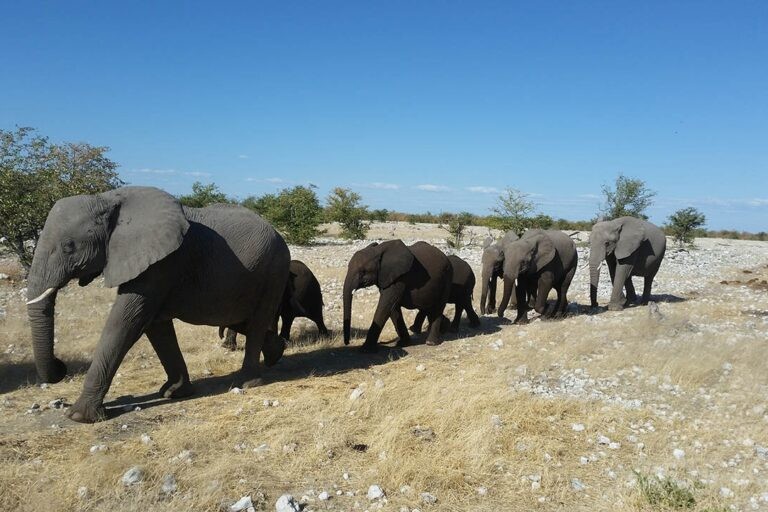
Africa’s monitored wildlife populations declined 80% since 1970, new report says
Africa’s monitored wildlife populations have declined an average of 80% since 1970, according to a new global assessment. The report also points to pockets of recovery where conservation efforts have been maintained over decades. The report on the decline in the average size of monitored populations was released Oct…

Bendy elm still standing against all odds crowned UK tree of the year
Hundred-and-fifty-year-old Wych elm in Newcastle, Co Down has grown sideways owing to strong winds The “astonishing and bizarre” Bendy Tree in Northern Ireland has been crowned the winner of this year’s tree of the year competition. The wych elm tree, located in Newcastle, County Down, owes its name to its near…

World must change way it produces food to avoid biodiversity collapse, says WWF
Recovery of tigers, tuna and green sea turtles show nature loss can be reversed when action taken, charity says Conservation comebacks for wild tigers, tuna and green sea turtles prove that global nature loss can be reversed, scientists have said. But a report warns food production must be the next “positive…