

Researchers Trial Sunflower Sea Star Releases to Support California Kelp Recovery
The Guardian reported that researchers near Monterey are briefly releasing lab-raised sunflower sea stars to study their movement and effects on kelp-eating sea urchins.

Researchers off Monterey, California, are testing whether restoring sunflower sea stars can help protect kelp forests by controlling the purple sea urchins that consume them, according to a Climate Central story published by The Guardian.
The Sunflower Star Laboratory’s field experiments involve briefly releasing lab-raised sea stars onto the seabed. Scientists observe their movements and monitor how nearby urchins respond, gathering baseline information needed for a full-scale return of the species to the wild, The Guardian reported.
Divers carry the animals underwater in plastic bags and place them inside specialised cages with their doors open, allowing the sea stars to move onto the surrounding seabed. The Guardian described the experiments as a first for California.
The work centres on the critically endangered sunflower sea star, which can have up to 24 arms. Ashley Kidd and Reuven Bank, co-founders of the nonprofit Sunflower Star Laboratory, are working to restore an animal once integral to the underwater ecosystem, according to The Guardian.
Inside the laboratory’s breeding facility, researchers use temperature-controlled tanks and marine husbandry techniques to raise a new generation of sea stars. Bank told The Guardian that the known number of sunflower sea stars in Monterey Bay was zero.
The restoration effort follows extensive losses along the Pacific coast. The Guardian reported that a marine heatwave beginning around 2013 raised water temperatures and accelerated the spread of sea star wasting syndrome, wiping out more than 90% of the Pacific sunflower sea star population.
Bank said the population had previously numbered 6 billion between Alaska and Baja California. He also told The Guardian that 95% of the kelp forests had disappeared over the past 10 to 12 years.
According to The Guardian, the loss of the sea stars allowed purple sea urchin populations to expand. The urchins consumed kelp roots and stalks, leaving areas that had supported underwater forests largely barren.
The researchers are studying both the sea stars’ feeding and their deterrent effect. The Guardian reported that a single sunflower sea star can eat three or four urchins daily, using hundreds of tiny tube feet to move its prey towards its mouth.
Bank explained that urchins also detect the sea stars’ scent and respond by hiding and feeding less, with effects extending up to 16ft in every direction. This behaviour gives young kelp an opportunity to establish and grow, according to The Guardian.
The ecological stakes extend beyond the plants themselves. The Guardian reported that kelp forests provide habitat for thousands of marine species. Kelp can grow taller than a 10-storey building and increase in height by as much as 2ft a day.
Worldwide, kelp forests absorb approximately 200 million tons of carbon dioxide annually, using it to grow, the outlet reported.
The current releases remain temporary research trials. The Guardian reported that, if the experiments succeed, the team hopes to permanently reintroduce sunflower sea stars to Monterey Bay within the next few years.
Sources
More coverage

Probiotic cuts risk of respiratory infections in formula-fed babies
Babies who are formula fed are more prone to infections, but the addition of a probiotic supplement containing sugars from breast milk slashed the risk of such infants catching respiratory viruses

NASA to Conduct Low-Altitude Flights Over Texas Farmland
A NASA Dynamic Aviation A200 aircraft will conduct low-flying research flights over farmland near Transit, Texas, from Thursday, Oct. 22, through Monday, Nov. 9. These flights will measure gaseous and particulate emissions from animal feeding operations. Agricultural emissions represent an important and understudied…
How Indian communities earn a living from more than forest timber
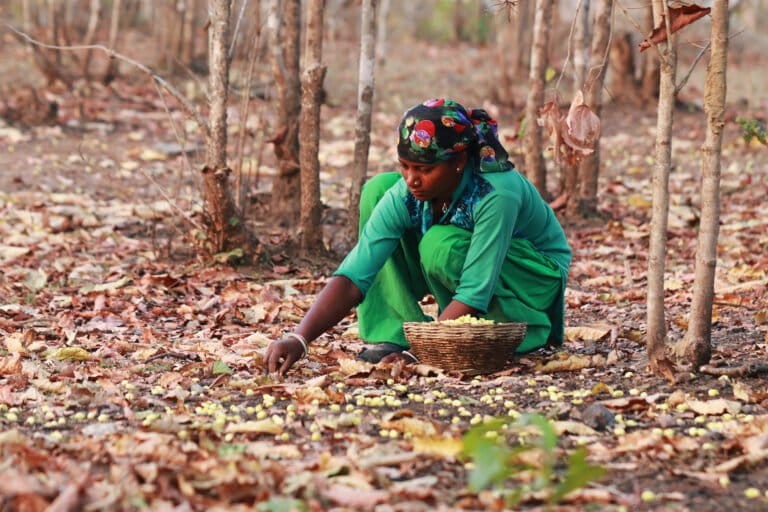
Every year between February and May, when mahua flowers begin to fall, Mamta Tigga collects them. Mamta comes from a village in Gumla in the Indian state of Jharkhand and has been collecting mahua (a flower from Madhuca longifolia), gethi kanda (or air potato, Dioscorea bulbifera) and tendu leaves from the Indian…

Time’s up for the leap second as scientists swap it for the leap hour
Delegates from 69 countries approve clock changeover after decades of debate – but switch may not take effect for thousands of years After decades of discussion, quibbling and worrying about clocks in computer systems, the world’s official timekeepers have voted to replace what many viewed as a tiresome correction…