

Prevention-Focused Pest Management Offers an Alternative to Blanket Spraying
Happy Eco News described how targeted treatments and household prevention measures can reduce reliance on pesticides, while noting higher initial costs.
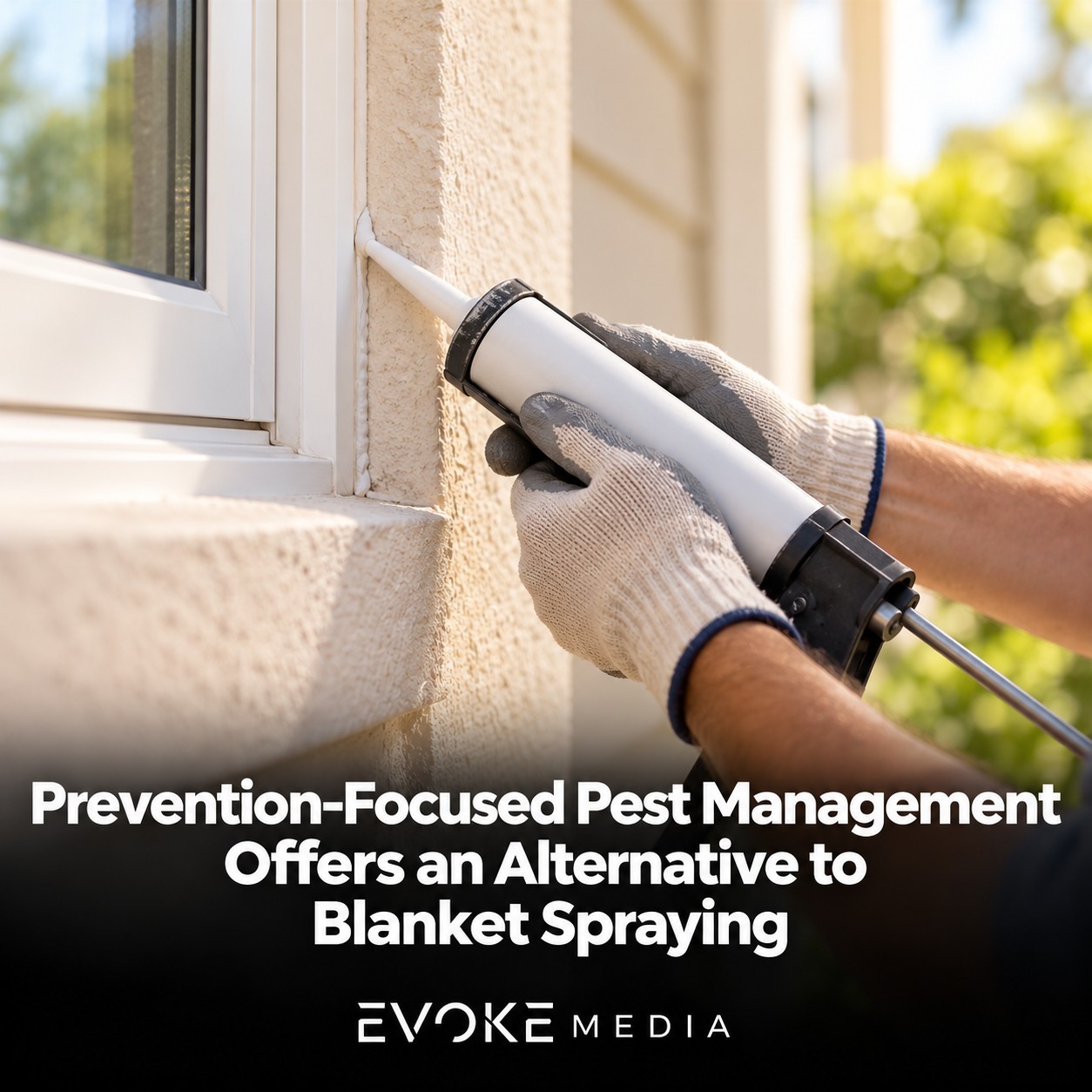
Prevention and targeted treatment are central to lower-impact household pest management, according to Happy Eco News. The outlet described integrated pest management, or IPM, as an alternative to routinely spraying an entire property, with inspections and structural fixes helping determine where treatment is needed.
Happy Eco News reported that sustainable services can initially cost more than basic chemical spraying. Biological treatments, botanical oils and targeted bait systems require precise application, monitoring and skilled technicians. The article described quotes running 15% to 30% above those of the cheapest conventional competitors in some areas.
The outlet argued that potential savings emerge over subsequent months and years rather than on the first invoice. It reported that broad-spectrum pesticides can also kill natural predators that help control pests, contributing to the need for repeat applications. Lower-impact methods, it said, work with biological cycles and can reduce follow-up treatments after the first season.
Prevention accounts for a substantial part of spending under this approach, according to Happy Eco News. Measures include sealing entry points, addressing moisture problems and installing physical barriers. The article presented these steps as ways to tackle conditions behind infestations rather than repeatedly treating their consequences.
Happy Eco News attributed a finding that 84% of homeowners experienced a pest problem in the previous year to the National Pest Management Association. It noted that household spending can include professional services, shop-bought products and repairs for property damage, not simply treatment visits.
Under IPM, technicians inspect a property, identify the pest and locate its access points before selecting an intervention, the outlet explained. Options can include targeted bait, biological controls or a structural repair. The article contrasted this process with blanket spraying that treats areas beyond the concentration of an infestation.
The report cited figures showing a 30.7% reduction in pesticide use and a 40.9% mean increase in yield under integrated pest management. However, Happy Eco News explicitly identified those results as coming from agricultural settings. They do not establish equivalent reductions or financial savings for residential properties.
The article also listed efficacy figures of 75% to 92% for biopesticides against targeted pests, with Bacillus thuringiensis associated with 85% to 95% larval mortality. Those figures were not presented as results from the household services discussed in the report.
Happy Eco News used Ohio’s Franklin County suburbs as an example of local conditions affecting pest management. It described seasonal problems involving ants, spiders, mice and wood-destroying insects, alongside clay soil and mature tree cover that can make some pests persistent.
The outlet named Green Shield Pest Pros in Westerville as a company using integrated, lower-impact treatments. Its account linked such service models to customer interest in protecting families and yards while limiting longer-term costs associated with heavy pesticide use.
Happy Eco News also described environmental benefits associated with reducing pesticide applications, including less runoff into waterways and reduced effects on pollinators. It said fewer indoor chemical applications could improve the home environment for children and pets, although the supplied report did not quantify those household outcomes.
For homeowners comparing services, the outlet suggested asking providers to explain their methods and separate prevention costs from treatment costs. It encouraged comparing value across multiple years rather than judging options solely by a single visit’s price.
The article presented prevention, monitoring and precise intervention as the basis of its proposed approach. Its cost-saving claims concern longer-term potential, rather than a documented guarantee that every household switching services will spend less.
Sources
More coverage

NASA to Discuss Artemis Acceleration, Status of Upcoming Moon Missions
NASA will provide an update on its plans to return American astronauts to the surface of the Moon by 2028 at 2 p.m. EDT, Friday, Oct. 23, at the agency’s Kennedy Space Center in Florida. Learn where to watch online: https://www.nasa.gov/live Participants in the briefing include: The update will include details about…

One of America's biggest meteor craters is 100 million years younger than we thought — and coincided with a global extinction event
Analysis of tiny zircon crystals buried within the 10-mile-wide Ames crater in northwest Oklahoma suggests that the submerged structure dates back to 370 million years ago, during the Frasnian-Famennian mass extinction event.

Giant bacteria could be living in your gut
Bacteria that are visible without a microscope are generally found in mangroves and fish, but an analysis of different species from around the world suggests they also reside in the human gut

Hannah Fry: How OpenAI has caused an existential crisis in mathematics
OpenAI has been throwing everything at solving long-standing maths problems. This should have been a glorious moment for mathematicians – but instead we're having a massive collective wobble, says New Scientist's new columnist, professor Hannah Fry