

JPL Marks 90 Years With Missions Targeting Earth Monitoring and Space Exploration
NASA outlined work on planetary aircraft, solar research, asteroid detection and Earth observation as its Jet Propulsion Laboratory approaches its 90th anniversary.
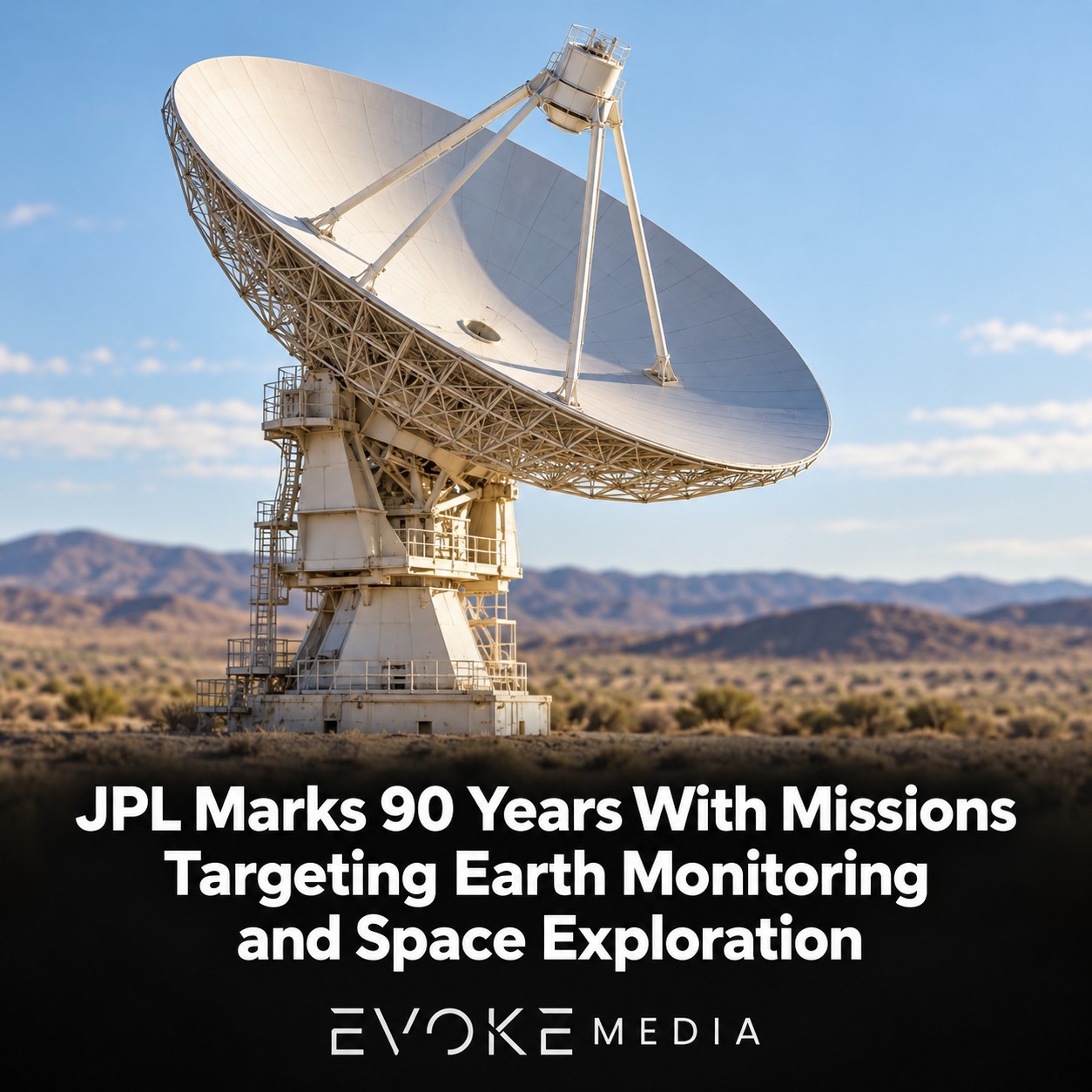
NASA’s Jet Propulsion Laboratory is developing missions to investigate Earth’s changing environment, detect potentially hazardous asteroids and extend robotic exploration of Mars and the Moon, NASA reported as the laboratory approaches its 90th anniversary.
Managed by Caltech for NASA, JPL traces its beginnings to rocket-propulsion experiments conducted by Caltech graduate students and enthusiasts in Pasadena’s Arroyo Seco on October 31, 1936.
According to NASA, the laboratory’s forthcoming work includes SkyFall, a Mars mission targeting a 2028 launch. It is designed to release three helicopters during descent to map hidden ice deposits and examine weather patterns.
JPL is also developing MoonFall, which NASA described as a mission to land a group of large, propulsion-powered drones at the lunar South Pole in 2028, supporting the agency’s Moon Base.
A separate mission, SunRISE, is scheduled for launch in 2027. NASA reported that its six small satellites will fly in formation, together functioning as a radio antenna extending across miles. The mission will study solar activity, with findings intended to support safer human space exploration.
Asteroid detection is another priority. According to NASA, the JPL-managed NEO Surveyor mission will search for potentially hazardous objects that other telescopes cannot detect. Identifying those objects allows the agency to assess threats and plan a response.
NASA also outlined Earth-observation projects examining water movement, tropical storms and air pollution. One mission will measure small changes in gravity to monitor water movement. Another will investigate how powerful tropical convective storms develop, while a third will examine how different forms of air pollution affect human health.
These projects accompany existing work including NISAR, a joint mission with the Indian Space Research Organisation. NASA reported that its radar can identify changes in Earth’s surface associated with natural disasters.
The agency also highlighted JPL’s airborne AVIRIS instruments, which can detect rare-earth elements used in modern technology. Their sensors were developed at the laboratory’s Microdevices Laboratory.
According to NASA, that facility also invented the camera-on-a-chip technology used in mobile phones. It is now developing detectors for PRIMA, a newly announced mission designed to study the universe through far-infrared radiation.
The anniversary programme builds on a history of spacecraft development. NASA reported that JPL launched Explorer 1, America’s first satellite, in 1958. Its onboard Geiger counter detected radiation belts surrounding Earth, and the laboratory became part of NASA that year.
JPL subsequently led missions involving planetary flybys, visits to the four gas giants, infrared astronomy, Mars rovers and powered flight on Mars, according to the agency.
NASA identified Dave Gallagher, JPL’s director since 2025, as one of the engineers involved in that history. In 1992, he led the laboratory team that built and tested the Wide-Field and Planetary Camera 2 for the Hubble Space Telescope.
The agency also highlighted the continuing Voyager missions. NASA said Voyager 1 was approaching a distance of one light-day from Earth on November 18—approximately 16 billion miles, or 26 billion kilometres.
Both Voyager spacecraft continue operating in interstellar space, communicating through NASA’s Deep Space Network, which JPL developed during the Apollo era, according to the agency. The network carries commands to the spacecraft and returns their scientific measurements to Earth.
Sources
More coverage

Brain scans reveal 'number line' that's used to mentally compare values
Although whole numbers and fractions are processed differently in the brain, when you compare their values, a single "mental map" akin to a number line lights up.
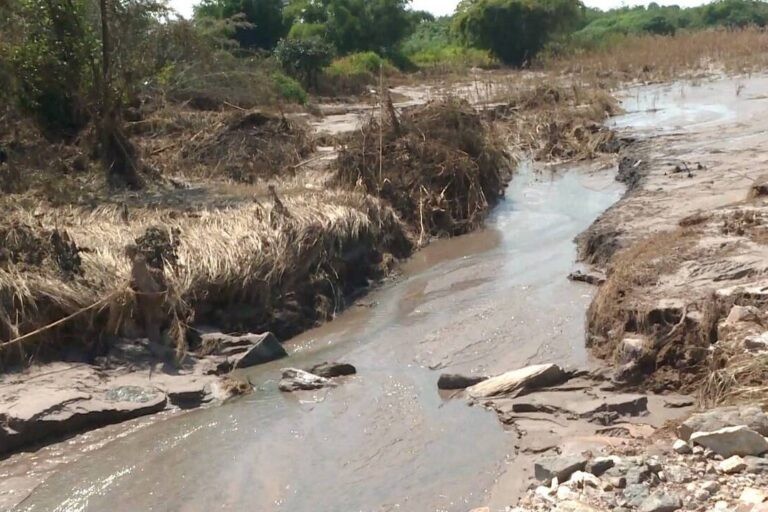
Another mining-linked pollution incident raises alarm over Zambia’s Kafue River
The Zambian government has ordered a copper miner to assess its infrastructure for weaknesses and clean up areas affected by pollution of the Kafue River, after residents downstream of the plant that processes the mine’s waste reported changes in the river’s color, taste, and smell on Sept. 28. The order also requires…
How Safer Driving Techniques Can Benefit the Environment
Happy Eco News How Safer Driving Techniques Can Benefit the Environment How Safer Driving Techniques Can Benefit the Environment Driving more safely doesn’t just benefit road users. Many of the habits associated with safer driving can also reduce a vehicle’s environmental impact by lowering fuel or energy consumption…

Watch bizarre snake 'cartwheel' away from danger at more than 12 feet per second
Researchers filmed dwarf reed snakes ( Pseudorabdion ) from different angles to better understand how the serpents pull off their remarkable rolling behavior.