

Delhi Students Clear Yamuna Riverbank and Call for Lasting Civic Action
The Better India reported that around 1,000 students joined a cleanup at Kalindi Kunj, removing approximately 2,000 kg of waste while discussing responsibility beyond the event.
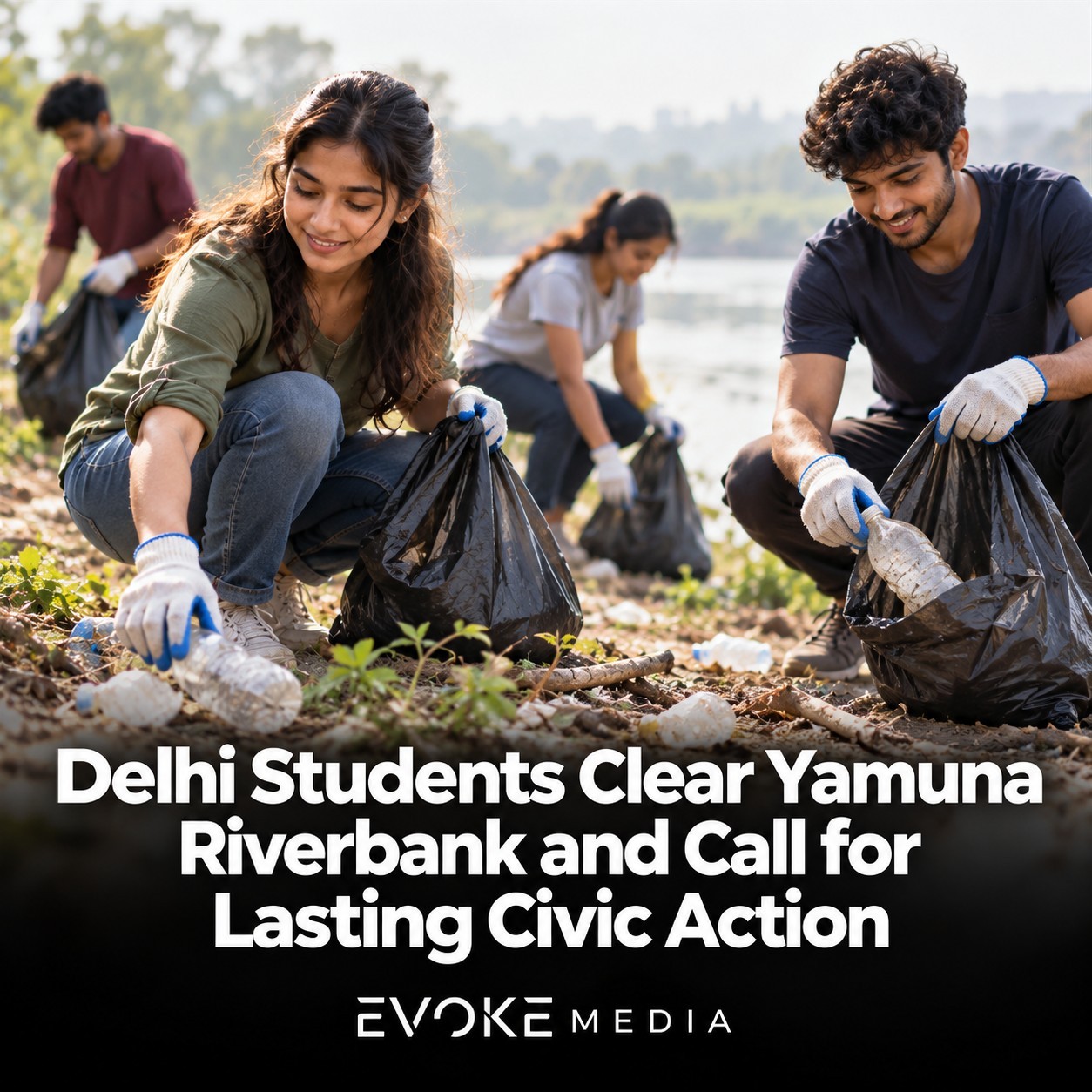
Around 1,000 students gathered at Kalindi Kunj in Delhi on Gandhi Jayanti for a Yamuna cleanup organised by Green Pencil Foundation in collaboration with The Better India, according to the publisher’s video and written coverage. The event formed part of the Gen Z Yamuna Jal Chaupal 2026.
The supplied reports all come from The Better India, with two reproducing the same video account. That account describes 1,000 students from 15 Delhi University colleges removing 2,000 kg of waste. The written feature uses slightly different figures: nearly 1,000 participants and more than 2,000 kg collected from the riverbank.
According to both accounts, participants began by removing their shoes and walking barefoot towards the river. The written feature describes the walk as a symbolic effort to connect students with the Yamuna and encourage shared responsibility for its condition.
The Better India identified the walk’s leaders as Sandy Khanda, founder of Green Pencil Foundation; Pankaj Kumar, founder of Earth Warrior; and Hiba Khan, founder of Hiba Green Foundation. Khanda told the publisher that the gesture was intended to help young people reconnect with the river and take responsibility for what happens to it.
After the walk, volunteers put on gloves and began collecting waste, according to the written feature. Participants included Delhi University students, Eco Club members and NSS volunteers. The video account specifically identifies plastic, textile waste and idols among the material removed.
The written report explains that students divided into three teams. One collected dry waste, another handled wet waste, and a third transferred the separated material to a designated collection point for the Municipal Corporation of Delhi. Those organisational details do not appear in the supplied video account.
The Better India reported participation from EnviSAGE, Haritashray, Paritantra, NSS ARSD, Green Brigade, Samvriti, Adveka, Aranya, Prithvi The Eco Club and NSS SRCC.
Several participants described how working beside the river affected their understanding of waste. Priyanshu, representing EnviSAGE at Sri Guru Nanak Dev Khalsa College, told the publisher that collecting rubbish prompted questions about its origins and destination. Bhumi Pathak of Haritashray said the experience made the Yamuna’s condition feel more personal.
The written feature also records students’ concerns about the limits of a single cleanup. Durgesh Kumar of Paritantra at Acharya Narendra Dev College said removing waste needed to be accompanied by understanding why it reaches the river and changing everyday behaviour.
Kartik Paliwal of NSS ARSD emphasised collective participation across colleges and organisations, according to The Better India. Prachi Jayara of Green Brigade at the College of Vocational Studies argued that young people wanted to participate in addressing environmental problems immediately, rather than being treated solely as future contributors.
Other students discussed extending the effort beyond the riverbank. The Better India reported that Yuvraj Singh of Adveka, the Environment Club of Dyal Singh College, supported continuing the conversation through campus activities and everyday choices throughout the year.
Prerna Bhati of Prithvi The Eco Club called for young people to be included in decisions about what follows campaigns. Swanman Koul of NSS SRCC similarly stressed maintaining responsibility after the event.
Both the video account and written feature frame the cleanup as more than a one-day exercise. The written report explicitly acknowledges that cleaning one stretch cannot resolve the Yamuna’s wider problems, while documenting the waste removed and participants’ calls for continued action.
Sources
More coverage
Driving test waits fall to two-year low - but still average 20 weeks
Learner drivers in September had to wait an average of 19.7 weeks, or around five months, for a practical test.
Russell Brand was a 'sexual predator', says prosecution as rape trial begins
The actor and comedian has pleaded not guilty to three counts of rape, three counts of sexual assault and one of indecent assault.

Texas prosecutor considering felony charges for ICE agent who ran over man
A conviction on the possible charge of aggravated assault with a deadly weapon could mean up to 20 years in prison A Texas prosecutor said he is considering felony assault charges for an Immigration and Customs Enforcement (ICE) officer who ran over a man following an attempted traffic stop and broke his leg in…
US inflation rises more than expected ahead of midterm elections
The pace of price rises increased to 3.7% in the year to September, driving by higher motor fuel costs.